April 2026: New features to simplify network management
Découvrez les nouveautés Cerca d’Avril : édition de documents en ligne, analyse avancée du tunnel de recrutement et optimisation du suivi de projet pour un pilotage de réseau plus fluide.


Découvrez les nouveautés Cerca d’Avril : édition de documents en ligne, analyse avancée du tunnel de recrutement et optimisation du suivi de projet pour un pilotage de réseau plus fluide.

Is a network audit an expense or an investment? Discover how to turn your controls into a profitability driver, protect your brand image, and boost franchisee engagement.

What retail KPIs should be prioritized for 2026? From external traffic to conversion rate, discover the 7 essential indicators for managing your network and optimizing profitability.

Découvrez comment Cerca, solution certifiée ISO 27001, garantit la sécurité des données de votre réseau. Un engagement fort pour la confidentialité, l’intégrité et la résilience de vos outils digitaux.

Pilotage réseau multi-sites : les nouveautés Cerca de Mars pour gagner du temps Le quotidien d’un réseau multi-sites est une course contre la montre. Entre le développement, l’animation terrain et la transmission du savoir-faire, les dirigeants et animateurs de réseau doivent pouvoir compter sur des outils qui simplifient l’action plutôt que de la complexifier. Ce mois-ci, Cerca franchit une nouvelle étape avec plus de 30 évolutions pensées pour fluidifier votre pilotage réseau. Focus sur les trois fonctionnalités majeures qui vont transformer votre manière de collaborer. Demandez une démo Lecteur vidéo intégré et hébergement natif : protégez votre savoir-faire La transmission du savoir-faire est le pilier de la réussite d’une enseigne. Jusqu’à présent, intégrer un tutoriel vidéo ou un process métier obligeait souvent à passer par des hébergeurs tiers comme YouTube ou Vimeo. Avec notre nouveau lecteur vidéo intégré avec hébergement natif, vous reprenez le contrôle total sur vos contenus de formation : Plus besoin d’hébergeur tiers : Uploadez vos fichiers vidéo directement dans votre base de connaissances Cerca, au même titre que vos PDF interactifs. Sécurité et confidentialité : Vos vidéos stratégiques ne sont plus sur des plateformes publiques ; elles restent protégées au sein de votre environnement sécurisé. Navigation d’audit multi-formulaires : l’agilité au service du terrain Un pilotage réseau multi-sites efficace repose sur des audits terrain qualitatifs. Pour coller à la réalité de vos visites, nous avons rendu la navigation entre vos grilles d’évaluation totalement fluide sur mobile. Lors d’une visite en point de vente, les animateurs peuvent désormais : Passer d’un formulaire à l’autre en un instant (ex: basculer de la grille « Merchandising » à la grille « Hygiène ») sans repasser par le menu principal. Suivre le fil naturel de l’échange avec le responsable de site, sans être contraint par l’ordre technique des formulaires. Gagner en réactivité : Une saisie plus rapide pour consacrer plus de temps au conseil et à l’accompagnement. Connexion Welcome to the Jungle : boostez votre développement Attirer les bons profils est crucial pour la croissance d’un réseau. Cerca continue d’ouvrir son écosystème pour simplifier le travail des développeurs en permettant la connexion avec Welcome to the Jungle. Disponible sur demande, cette intégration permet de : Centraliser vos flux de candidats externes directement dans votre interface de recrutement Cerca. Supprimer les doubles saisies administratives entre votre vitrine employeur et votre outil de pilotage. Accélérer vos recrutements grâce à une vision unifiée et une synchronisation en temps réel de votre pipeline de candidats. En bref : un pilotage réseau toujours plus collaboratif Ces évolutions sont, comme chaque mois, le fruit d’un dialogue permanent avec nos utilisateurs. Chez Cerca, nous ne développons pas de fonctionnalités isolées : nous co-construisons avec vous l’outil le plus intuitif pour digitaliser vos process et faire grandir votre réseau. Prêt à passer à la vitesse supérieure ? Demandez vos 30 jours d’essai gratuit sans engagement Ces articles peuvent vous intéresser : Réseaux multi-implantés Les 7 KPI retail indispensables pour piloter la performance de votre réseau 6 avril 2026 Quels KPI retail privilégier pour 2026 ? Du trafic extérieur au taux de conversion, découvrez les 7 indicateurs… En savoir plus Réseaux multi-implantés Certification ISO 27001 : Comment Cerca garantit la sécurité de vos données 3 avril 2026 Découvrez comment Cerca, solution certifiée ISO 27001, garantit la sécurité des données de votre réseau…. En savoir plus Rien par ici 👀 !

Creating an Effective Training Program: The Key to a High-Performance, Sustainable Network In a franchise or branch network, there’s a lot of talk about the concept, the brand, the expansion strategy, marketing, and regional development. But there’s far too little discussion of a lever that is nonetheless fundamental: the training program. A network doesn’t grow solely because of a good idea. It grows because that idea is understood, applied, replicated, and improved on the ground. And that’s something that can be learned. Creating an effective network training program isn’t just about organizing a few days of initial training. It’s about building a system that supports franchisees and their teams throughout their journey. In this article, let’s take a step back and explore how to structure a network training program that isn’t merely educational but truly strategic. Discover our solutions for structuring your network A training program is not just initial training This is probably the most common mistake. Many networks view training as: a session at headquarters, a few days of on-the-job training, an operations manual, and then… off you go. But the reality on the ground is quite different. The franchisee opens their store amid stress, urgency, and a significant financial investment. They must recruit and train their team, manage inventory, and market locally. They absorb a huge amount of information and inevitably forget some of it. If training ends at opening, it creates structural vulnerability. A true training journey begins before opening, intensifies during the launch, and continues throughout the store’s entire lifespan. A network’s performance depends on this continuity. Approaching Training from the Perspective of Business Results An effective training program never begins with the question: “What are we going to teach?” It begins with another, far more strategic question: “What results do we want to achieve?” A retail chain does not train just for the sake of training. It trains to: improve conversion rates, increase average basket size, reduce non-compliance, accelerate the path to profitability, lower turnover, and standardize the customer experience. If training isn’t linked to concrete metrics, it becomes theoretical. It may be intellectually interesting, but it doesn’t transform performance. A good training program therefore starts with the network’s KPIs. It draws on real-world data to identify areas for improvement. It becomes a management tool. Training means taking action to improve performance. Structuring the Program Over Time A network evolves. Profiles vary. Needs change. A franchisee who has just signed their contract does not have the same needs as a franchisee who has been in business for three years. An experienced manager does not have the same expectations as a novice salesperson. Creating an effective development path means acknowledging this progression. Several major phases can be distinguished. First, the pre-onboarding phase. This phase introduces the network’s culture, the fundamentals of the concept, and the brand’s values. It establishes initial alignment. Next comes the launch phase. This is when operational aspects take precedence: standards, procedures, customer experience, and team organization. The franchisee must feel confident. Then comes the stabilization phase. This is when optimization begins: detailed analysis of metrics, margin management, local sales promotion, and team management. Finally, for mature locations, the program must incorporate more strategic modules: leadership, multi-site development, and growth management. An effective program is progressive; it evolves alongside the franchisee’s maturity. Adapting Training to Teams’ Daily Workflows Building a network doesn’t mean bringing business to a standstill. In retail or the restaurant industry, teams are already under pressure. Time is limited. Days are packed. If training becomes a heavy burden, it will be seen as a hindrance. An effective training program must therefore fit into the reality on the ground. This implies several things. First, easy access. Today, training must be mobile, accessible from a smartphone or tablet. Teams aren’t sitting at a computer all day. Next, short modules. Micro-learning is particularly well-suited. Content that’s targeted, concrete, and immediately actionable. Finally, a flexible approach. Allow teams to learn at their own pace, without shutting down the store for hours. Training should support business operations, not slow them down. Measuring the Real Impact of Training Many retail chains are content to measure completion rates. “The module was completed.” But is that enough? An effective training program must go further. It must ask a simple question: Did the training make a difference? After training on upselling, does the average basket size increase? After a module on customer service standards, do customer reviews improve? After a program on inventory management, do stockouts decrease? Training becomes truly strategic when it’s linked to on-the-ground metrics. That’s when it stops being a cost center and becomes a driver of profitability. Incorporating Front-Line Insights into the Training Program A network isn’t a top-down organization. It’s a living ecosystem. Best practices don’t come solely from headquarters. They often emerge from the front lines. A top-performing franchisee has developed effective methods. An experienced manager has found practical solutions to everyday problems. An effective training program must incorporate this feedback. This reinforces the credibility of the content. It fosters engagement. It recognizes the network’s ambassadors. We’re shifting from a “we’ll tell you how to do it” approach to a “let’s build it together” approach. That’s a major difference. Establishing a culture of continuous learning In a retail or multi-site environment, nothing is set in stone. Customer expectations evolve. Tools change. Regulations shift. Competition is intensifying. A network that stops learning falls behind. Creating an effective training program means establishing a culture of continuous improvement. This means: accepting that excellence is never a given, encouraging feedback, regularly updating content, and adapting to changes in the business model. Training then becomes an ongoing process, not a one-time event. Ensuring the Transfer of Know-How In franchising, the transfer of know-how is not[…]

Why is training the number one driver of profitability in franchising? When we talk about profitability in franchising, the usual responses are almost always the same. We mention the business model. The location. The strength of the brand. National marketing. Purchasing power. Rarely training. And yet, if we look at the networks that perform best over the long term, one common thread consistently emerges: they invest heavily in training. Not just at the start. Not just to check a legal box. But as a true strategic driver of performance. Because in franchising, profitability doesn’t rest solely on a good idea. It rests on the ability to replicate that idea perfectly, everywhere, and over the long term. And that ability always starts with training. Request your free trial of the e-learning module Franchising Rests on a Fragile Promise Franchising is a powerful model. It allows for the rapid development of a concept by relying on independent entrepreneurs. It combines the strength of a brand with the energy of local initiatives. But this model has a structural vulnerability. The franchisor does not directly manage the teams on the ground; instead, it passes on know-how to legally independent partners. The network’s performance therefore depends on the quality of that transfer. If the know-how is misunderstood, poorly assimilated, or incorrectly applied, the concept becomes distorted. And when a concept becomes distorted, profitability erodes. A customer does not judge a retail network on a store-by-store basis. They judge the brand as a whole. A bad experience in one city can impact the brand’s national reputation. Sloppy execution can undermine a marketing promise built up over many years. Training is therefore the first line of defense against the dilution of the concept. Rapid skill development = faster profitability. A franchisee often opens their store under considerable pressure: significant financial investment, immediate fixed costs, team recruitment, and the challenge of building local brand awareness. Every week counts. The faster the franchisee reaches an optimal level of execution, the shorter their ramp-up time. Conversely, a poorly trained franchisee: makes costly mistakes, misinterprets standards, makes poor operational decisions, and places a heavy burden on corporate support. This lost time directly translates into lost profit margins. A well-trained franchisee understands: their key performance indicators, their cost structure, their performance drivers, and the network’s strategic priorities. They become self-sufficient more quickly—and self-sufficiency accelerates profitability. The Hidden Cost of Lack of Training Training is often viewed as an expense. This is a mistake. The true cost is that of not providing training. A poorly trained employee leads to: operational errors, customer dissatisfaction, product returns, internal conflicts, and high turnover. A franchisee who lacks proper support leads to: tensions with headquarters, contractual misunderstandings, deviations from the business model, and gradual demotivation. These costs aren’t always visible on a balance sheet. But they weigh heavily on the network’s overall performance. Training isn’t expensive—but improvisation is. Consistency: The Key to Network Profitability A high-performing network doesn’t rely solely on its best locations. It relies on the network’s average performance. What creates value is consistency. When every location delivers the same level of experience: the brand gains credibility; national communication becomes more effective; customer trust increases; and customer loyalty grows. Yet consistency cannot be mandated. It must be taught. It must be structured. It must be passed on. Training is the only lever that ensures the concept remains true to its original intent, regardless of location. Training frees up headquarters. Another often-underestimated effect concerns the franchisor’s internal organization. In a poorly trained network, headquarters spends its time managing emergencies: basic questions, recurring problems, misunderstandings about procedures, and avoidable errors. The support teams become firefighters. Conversely, in a well-trained network, support staff can focus on: strategic development; high-value-added support; performance optimization; and identifying innovations from the field. Training therefore increases headquarters’ productivity. And when headquarters operates more strategically, the entire network becomes more efficient. Continuing education: the real differentiator Many networks invest adequately in initial training. But that’s not where the real challenge lies. The market is evolving. Customer expectations are changing.Digital tools are advancing. Regulations are changing. A network that does not provide ongoing training gradually becomes obsolete. Ongoing training enables: the adoption of new practices, alignment with product developments, the maintenance of a consistent level of excellence, and the strengthening of the network’s culture. It is also a powerful tool for engagement. A franchisee who feels they are making progress stays motivated. A team that grows stays engaged. Profitability also depends on collective energy. Training as a Legal Tool In franchising, the transfer of know-how is not an option. It is an obligation. A franchisor must be able to demonstrate that it is effectively passing on its concept. In the event of a dispute, the traceability of training becomes a key factor. A structured network that can prove which modules were completed, which certifications were obtained, and which updates were distributed protects itself legally. Training is therefore not just an economic lever; it is also a lever for security. The Multiplier Effect Franchising is a model that leverages results. A local improvement can produce a multiplied impact. If training increases: the average basket size by 5 %, the conversion rate by 3 %, and team productivity by 10 %—and this applies to 50, 100, or 300 retail locations… The impact becomes massive. Few levers offer such multiplier potential. Training is one of the few investments capable of simultaneously improving: the customer experience, financial performance, brand consistency, and legal stability. Training creates a shared culture. Beyond procedures, training conveys a culture. A vision. A way of doing things. A way of making decisions. In a network, this shared culture is essential. It reduces conflicts and facilitates communication[…]
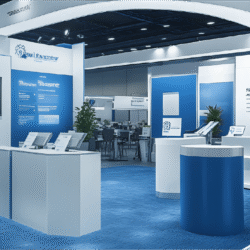
Rentabiliser ses investissements Salon : repenser l’événement comme un levier stratégique Chaque année, les réseaux investissent des sommes importantes dans les salons professionnels.Stand, logistique, déplacements, hébergement, mobilisation des équipes. Le coût est réel, visible, mesurable. Ce qui l’est beaucoup moins, en revanche, c’est le retour sur investissement réel de ces événements. Quelques semaines après, le constat est souvent le même : Le Salon s’est bien passé, les échanges ont été nombreux, l’ambiance positive mais il est difficile de dire précisément ce que tout cela a produit. Combien de projets ont réellement émergé ? Combien de contacts ont abouti ? Et surtout : qu’est-ce que le réseau a appris de cette présence ? Le problème n’est pas le salon en lui-même.Le problème, c’est la manière dont il est pensé et intégré dans une stratégie globale. Demandez vos 30 jours d’essai gratuit Un Salon n’est pas un événement ponctuel, c’est un investissement Un Salon ne devrait jamais être considéré comme une simple opération de visibilité.C’est un investissement stratégique, au même titre qu’un déploiement marketing ou qu’un projet de développement. Et comme tout investissement, il doit être abordé avec trois questions simples : Pourquoi y allons-nous ? Qu’attendons-nous concrètement ? Comment allons-nous exploiter ce qui en ressort ? Sans réponse claire à ces questions, le Salon devient une action isolée.Visible, certes, mais difficilement rentable. Avant le Salon : clarifier les objectifs pour donner de la valeur aux échanges La rentabilité d’un salon se joue en grande partie avant son ouverture. Un réseau qui sait précisément ce qu’il vient chercher n’aborde pas les échanges de la même manière. Recruter de futurs partenaires, identifier des opportunités commerciales, renforcer une marque, tester un discours, prendre le pouls du marché : chaque objectif implique une posture différente. Lorsque les équipes partagent cette clarté, les discussions gagnent en profondeur.Elles ne sont plus de simples échanges cordiaux, mais des points d’entrée vers des parcours structurés. Pendant le Salon : capter de l’information, pas seulement des contacts Beaucoup de salons génèrent des listes de contacts mais peu de données réellement exploitables. Or, ce qui crée de la valeur, ce n’est pas le volume, mais la qualité de l’information recueillie :le besoin réel, le niveau de maturité, les contraintes, l’horizon de décision. C’est cette compréhension fine, captée sur le moment, qui permet ensuite un suivi pertinent.Sans cela, le contact devient abstrait et finit souvent oublié dans un fichier ou un outil mal exploité. Après le Salon : transformer l’essai dans la durée C’est après le Salon que tout se joue réellement. Un événement n’est rentable que s’il déclenche une dynamique : des relances rapides, des échanges personnalisés, des rendez-vous qualifiés, parfois sur plusieurs mois. Sans organisation claire, le salon s’arrête le jour où le stand est démonté.Avec un suivi structuré, il devient un point de départ. C’est aussi à ce moment-là que le réseau peut tirer des enseignements précieux : quels profils ont été rencontrés, quels messages ont résonné, quels freins sont revenus le plus souvent. Faire du Salon un levier durable, pas une dépense isolée Rentabiliser un salon ne signifie pas en faire plus, ni multiplier les événements.Cela signifie mieux les intégrer dans une logique de pilotage et de continuité. Un Salon bien exploité nourrit la stratégie commerciale, marketing et réseau.Il alimente la réflexion du siège, éclaire les décisions et renforce l’alignement entre le terrain et la tête de réseau. Chez Cerca, c’est cette approche que nous défendons : considérer le salon non comme une fin en soi, mais comme un point d’entrée dans un dispositif plus large, structuré et mesurable. Car au fond, un Salon n’est jamais un coût par nature.Il le devient uniquement lorsqu’on ne sait pas quoi en faire après. Et c’est souvent là que tout se joue. Ces articles peuvent vous intéresser : Réseaux multi-implantés Rentabiliser ses investissements Salon : repenser l’événement comme un levier stratégique 11 mars 2026 Rentabiliser ses investissements Salon : repenser l’événement comme un levier stratégique Chaque année,… En savoir plus Franchise Animation de réseau de franchise : pourquoi formaliser les visites change tout 27 février 2026 Animation de réseau de franchise : pourquoi formaliser les visites change tout Comment animer mon réseau… En savoir plus Rien par ici 👀 !

On the agenda this month: the ability to self-administer artificial intelligence features, along with the arrival of Cerca Vibes, and the opening of the beta for the Tickets module in its new interface.

Network Manager: what will truly be expected of the profession in 2026, between strategic, relational, and digital roles.


 Français
  English
  Español