signaux d'alerte franchisé en difficulté animation réseau multi-sites standards point de vente accompagnement franchisés

5 warning signs that a franchisee or point of sale is in trouble

5 Warning Signs That a Franchisee or Retail Location Is in Trouble (Before It Fails) A franchisee or retail location almost never fails overnight. Before a breakdown occurs, there are almost always warning signs. They develop gradually, are sometimes subtle, but are rarely nonexistent. The problem isn’t so much their absence as it is how they’re interpreted—or the fact that they’re addressed too late. In a previous article on the warning signs of a poorly structured or inadequately supported franchise network, we showed that vulnerabilities can arise at the network headquarters level. But even in a well-organized network, difficulties rarely emerge suddenly. They first manifest locally, through warning signs observable on the ground, in relationships, and in day-to-day operations. For leaders of multi-site networks and support teams, the challenge is clear: detect these warning signs in time, assess them without judgment, and intervene before a fragile situation turns into a lasting breakdown. Build a True Community Around Your Brand Why Warning Signs Are Hard to Detect in Multi-Site Networks Warning signs often go unnoticed because they get lost amid the day-to-day operational noise. A delay, a missed meeting, a slight dip in a metric. Taken in isolation, these elements seem insignificant. In many networks, analysis still relies primarily on KPIs. These metrics are essential, but they only become truly alarming once part of the problem has already taken hold. At that stage, there is less room to maneuver. Another challenge is the lack of a common framework. Without shared guidelines for interpretation, each team leader interprets warning signs based on their own experience. Some sound the alarm very early on, while others downplay the issue for a long time. This subjectivity leads to inconsistencies in how situations are handled and sometimes delays decision-making. Finally, there is a natural reluctance to label a situation as “at risk.” Out of fear of stigmatizing someone or damaging the relationship, people prefer to wait. However, ignoring a warning sign never improves the situation. It simply reduces the ability to act effectively. 5 Warning Signs to Look For Before a Retail Location Fails Warning signs are not meant to assign blame. They help us understand a trajectory. When observed over time and analyzed in conjunction with one another, they provide a much more reliable picture than a single isolated event. 1. A Shift in Interpersonal Dynamics This is often the first warning sign. The relationship changes before the results do. The franchisee or store manager becomes less responsive to requests, participates less in the network’s group activities, and sometimes adopts a more defensive or passive tone. Communication becomes more formal and less constructive, and joint initiatives become less frequent. This relational warning sign often reflects a loss of trust, gradual isolation, or underlying fatigue. It is valuable because it appears early on and allows for intervention without direct confrontation. 2. A Gradual Deterioration in Financial Indicators A one-time underperformance is not a warning sign in itself. However, a slow but steady decline in revenue, tightening cash flow, or delays in submitting financial reports should serve as a warning. These financial warning signs are often the result of successive cost-cutting measures: reduced investments, less local marketing, less training, and sometimes lower inventory levels. They do not always indicate a lack of competence, but rather a structural vulnerability that is taking hold. The later these warning signs are detected, the less ability there is to correct the situation. 3. A Gradual Misalignment at the Point of Sale Failure to comply with brand standards is a common warning sign, but one that is still too often downplayed. A decline in customer service, haphazard merchandising, inconsistent cleanliness, unstable teams, high turnover, and a decrease in local marketing initiatives. Taken separately, these elements may seem minor. Together, they indicate a loss of operational control. This warning sign is rarely intentional at first. It often reflects overload, a lack of prioritization, or weakened management. Without support, it fuels a negative cycle involving customer experience, performance, and team motivation. 4. A Loss of Vision and Direction A struggling retail location doesn’t just lack results. It often lacks direction. Rejecting new initiatives proposed by the network, expressing doubts about the overall strategy, or failing to set new goals are significant warning signs. They indicate that the local manager can no longer envision the network’s future. When faced with this type of warning sign, a simple reminder of procedures is insufficient. It is often necessary to focus on purpose, prioritization, and the development of a realistic path forward. 5. Personal or Psychological Signs Some warning signs are more subtle, but they strongly influence the store’s trajectory. Visible fatigue, chronic stress, burnout, unresolved personal conflicts, or subtle signs of disengagement are all indicators that should not be overlooked. They have a direct impact on the ability to manage operations and maintain the network’s standards. The goal is not to push personal limits, but to tailor the support provided: active listening, guidance, coaching, operational support, or a temporary adjustment of expectations. How to Respond to Warning Signs: Method and Prioritization Identifying a warning sign is only valuable if it triggers an appropriate response. All too often, networks wait, over-monitor, or act without a proper assessment. The first step is to conduct a fact-based assessment. This involves a structured discussion based on concrete, shared observations—not on impressions. Next comes the development of a realistic action plan. A few well-targeted measures, a clear timeline, defined responsibilities, and monitoring metrics are often enough to get a situation back on track. Finally, follow-up is crucial. A plan without follow-up remains theoretical. Excessive monitoring can strain the relationship. The key lies in striking a clear balance, with transparency regarding decisions and adjustments. Structuring facilitation to prevent long-term disengagement In a network with multiple locations, detecting warning signs cannot rely solely on individual experience[…]

November 2025

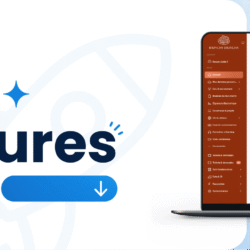
November 2025: New features that simplify the management of multi-site networks

November 2025: New features that simplify the management of multi-location networks Updates designed for smoother, clearer, and more efficient management Every month, the Cerca collaborative platform evolves to meet the needs of multi-location networks: franchises, retail chains, branch offices, or brand groups. In November, several key improvements were rolled out to enhance visibility into field operations, simplify administrative tasks, and provide a more strategic view of growth. Here’s a closer look at three major new features that improve team efficiency, from headquarters to the field. 1. Simpler Invoice Management Invoice management is one of the most time-consuming responsibilities for administrative teams. To streamline these processes, Cerca is introducing a set of enhancements designed to ensure clarity and consistency in payments. It is now possible to define a specific payment method for each client: bank transfer, direct debit, Stripe, GoCardless, or a custom IBAN.Once the settings are configured, the platform automatically applies the selected method when generating invoices. Users can also filter their invoices by payment method, making it easier to organize, track, and analyze payments. This update allows accounting and administrative teams to save time, better organize their cash flows, and work with greater clarity regarding network payment terms. Automate your royalties with Cerca 2. More Transparent Field Visits Thanks to Question-by-Question History Field monitoring relies on the ability to compare changes at a site from one visit to the next. Until now, this comparison sometimes required reviewing several previous reports to find answers, files, or comments. Now, when filling out a report, users have direct access to the question-by-question history: previous notes, responses, dates, attached files, comments, and the overall rating from the last report. This makes information available at the right time and in the right place, without having to search through the complete history of site visits. This new view enables: a better understanding of how sites are evolving, more relevant and better-documented site visits, and significant time savings for network coordinators. 3. A Consolidated Recruitment Overview for Instant Strategic Insight Multi-site networks often have to manage multiple recruitment scenarios: by country, by brand, or by career path. Until now, statistics were viewable on a scenario-by-scenario basis, which limited the big-picture view. The new “All” view now provides a consolidated analysis of the candidate pipeline by grouping all scenarios into a single interface. Users can thus view: the total volume (active and archived), the breakdown by stage and by source, the reasons for archiving, candidate tags (regions, referrals, profiles, etc.), as well as geographic distributions. This comprehensive view offers a more strategic perspective on recruitment dynamics and facilitates decision-making for development teams. Convert 26 % more candidates And much more… In addition to these three major updates, other improvements were rolled out this month, including: expanded search capabilities within projects (checklists, descriptions, task conversations), display of the upload date in the knowledge base, the ability to add members to an existing discussion group, a search bar in personal folders, and other usability enhancements. All of these updates help streamline the user experience and strengthen day-to-day operational management. A platform that evolves with its users As we do every month, feedback from our client brands informs Cerca’s product roadmap.This collaborative approach allows the platform to evolve in line with the needs of multi-location chains and their field teams. Cerca continues its mission: to offer chains a single platform to track, analyze, and drive their performance, with a constant focus on simplicity, fluidity, and clarity. Sign up for your 30-day free trial You may be interested in these articles: Development 3 Human Factors That Really Make a Difference in a Growing Franchise December 11, 2025 Discover the three human factors that transform the performance of a growing franchise: engagement,… Learn more Franchise: 3 Mistakes That Weaken a Franchise Network Right from Its First Locations December 4, 2025 New franchisors: discover the three mistakes that weaken a franchise network right from its first locations… Learn more Nothing here 👀!

network head

6 Strategic Missions That Define a High-Performing Network Leader

6 Strategic Missions That Define an Effective Network Leader For a long time, being a network leader essentially meant “supporting, coordinating, and overseeing.” But that model is a thing of the past. Today, at a time when retail chains must: restructure more quickly, communicate their expertise more clearly, meet high societal expectations, integrate digital technology and AI without neglecting the human element, and protect their image at every location… the role of the network leader has become a strategic leadership position in its own right. Especially since the tools have evolved radically: where networks once moved forward “by trial and error,” there are now high-performance digital solutions that make it possible to organize, anticipate, and manage… without wasting time. In this context, the absence of clear processes, unified reporting, or consistent sharing of expertise is no longer merely a “shortcoming”—it has become a factor leading to failure. Here are the six key tasks that are redefining the role of a network leader today. 1. Anticipate market shifts. Being a network leader today means being able to spot early warning signs.Signals that haven’t made the headlines yet… but that already foreshadow profound market transformations. This involves anticipating: New trends: the rise of phygital, e-learning, the need for immediacy, and the demand for a seamless and consistent experience across all touchpoints. The widespread adoption of AI: operational automation, AI avatars for creating training videos, inventory optimization, improved training, and new standards for speed in decision-making. Legal and regulatory changes: environmental standards, stricter GDPR requirements, and increased obligations for franchisors regarding information and support. Cost pressures: inflation, rising energy costs, and wage pressures—all factors that directly impact profitability at the store level. New consumer behaviors: a search for transparency, ethics, local sourcing, and engagement… but also a constant balancing act between price and value. The role of the network headquarters has never been more strategic: it must detect, interpret, and transform these early warning signs into concrete decisions before they become operational emergencies. But be careful: anticipation alone is not enough. A network cannot absorb all changes at the same pace as headquarters. Processes are already in place, teams are up and running, and day-to-day priorities take precedence. An innovation, even a relevant one, cannot simply be “rolled out” just because it makes strategic sense. This is precisely where success depends on another factor: headquarters’ ability to understand the right pace for implementation and to foster buy-in from the field. Anticipate, yes. But anticipate in tandem with the network, and never against its natural pace of adoption. 2. Managing a Seamless Omnichannel Experience Customers switch from digital to in-store in a matter of seconds. A slow website, a poorly maintained Google listing, an inactive Instagram store… and the overall experience falls apart. The network headquarters must: harmonize communication, structure customer journeys, and ensure a consistent level of service. Within a network, customers never distinguish between individual locations and the brand itself: a disappointing experience at one location can damage the perception of the entire brand. That’s why a network headquarters must anticipate deviations, identify quality gaps, and track key KPIs to maintain a consistent level of performance across the entire territory. 3. Make Smart Use of Data Data is only valuable if it drives action. In many networks, figures are collected, shared, discussed… and then forgotten. For an effective network headquarters, data isn’t just a report—it’s a decision-making tool. Gain an Accurate Understanding of the Network An effective network headquarters uses data to understand and anticipate what is actually happening on the ground. It’s not about piling up metrics, but about knowing how to interpret them: consolidating field metrics (revenue, margin, average basket size, NPS, turnover, productivity…); monitoring store performance with an instant overview; measuring variances to quickly identify deviations; identifying levers for action: training, processes, merchandising, internal organization… Concrete example: Two stores generate the same revenue, but one has a significantly lower margin.Data makes it possible to quickly identify the cause: purchasing management, shrinkage, lack of upselling, poor implementation of the concept, etc. Without this analytical insight, the network head cannot prioritize actions or tailor support. Managing the Network Itself as the Network Head Data isn’t just for analyzing retail locations. A high-performing network head also tracks its own internal metrics, as the network’s success depends directly on the quality of its management. Key KPIs include: the cost of acquiring a franchisee (marketing + time + tools + HR); conversion speed (average cycle time, friction points, drop-off rates between each stage); the quality of franchisee support (visits completed vs. planned, action plans implemented, effectiveness of interventions); headquarters’ responsiveness (response time to franchisees, handling of requests); and the contract renewal rate, the ultimate indicator of a successful model. Concrete Example: A network finds that converting candidates takes an average of 8 months—compared to 3 months for its competitors. This KPI reveals a process that is too long or a lack of reassurance. By identifying this issue, the network headquarters can review the process, simplify it, automate it, and speed it up. In summary: leveraging data means steering the business, not just observing it. The modern network headquarters uses data to: make decisions faster, provide more tailored support, prioritize essential actions, ensure consistent performance, and anticipate risks before they become apparent. Today, the strongest networks are those that have turned data into a source of insight, not just a “spreadsheet of numbers.” Manage your data with Cerca 4. Foster a strong and visible CSR vision CSR is no longer just a nice-to-have.It’s a consumer demand… and an expectation of franchisees (especially younger generations). But embodying CSR doesn’t just mean “making a gesture.” It means establishing: sustainable practices, a responsible HR policy, and measurable commitments,[…]

knowledge base

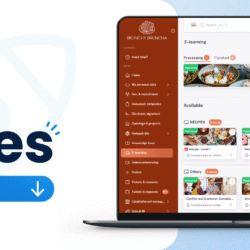
New Cerca Interface: Customize your knowledge base

We’re thrilled to share the latest updates on the redesign of our Cerca solution. This week, we’re highlighting our knowledge base—an essential feature for any multi-location network. A Clean, Modern Interface for Your Knowledge Base We’ve carefully redesigned the interface to be both modern and streamlined. This new look doesn’t compromise functionality, however. Every element has been designed to provide a smooth and enjoyable user experience. Visual customization options allow you to create an interface that perfectly reflects your network’s identity, while remaining elegant and professional. Enhanced customization Like the Home page, the knowledge base now features new customization options. With this new interface, you can add custom covers to your books using images, colors, and icons. This visual customization makes your resources more appealing and easily accessible, making it easier for your users to quickly identify crucial information. Simplified Editing Add and edit the content of your books and book groups directly from the knowledge base, without going through a complex administration process. This feature makes managing your resources more intuitive and efficient, ideal for quick and accurate updates. No more navigating back and forth through complex menus; everything is accessible in just a few clicks for optimized management of your documentation. Training and engagement of your network The knowledge base isn’t just a document management tool. It’s also a powerful way to optimize training and engagement within your network. By centralizing all your educational and informational resources in one place, you make it easier for your employees and/or franchisees to access information. Whether it’s procedure guides, training videos, or PDF documents, everything is now accessible in a seamless and intuitive way. Your Resources, Wherever You Are With the new knowledge base interface, accessing your resources has never been easier. Thanks to our mobile app, your employees can view and edit content from their smartphone or tablet, no matter where they are. This increased mobility allows for maximum flexibility and ensures that your teams stay connected and informed at all times, without being constrained by office access limitations. Control and security remain at the heart of our solution The security of your information is our top priority. You can always precisely control who has access to which resources. Advanced permission settings allow you to restrict access to sensitive documents and ensure that only authorized individuals can view or edit content—even though this is no longer done through the Administration menu. This feature is essential for protecting confidential information on your network. We’re confident that these improvements will help strengthen expertise and engagement within a multi-site network, while offering a more enjoyable and efficient user experience. Looking for a packaged solution that can also adapt to your needs? Join the Cerca revolution and request your free, no-obligation 1-month trial. I’m joining the Cerca revolution You might also be interested in these articles:

new cerca interface

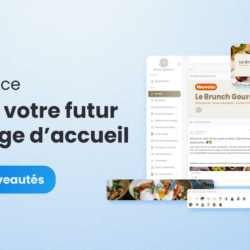
New Cerca Interface: Customize your home page

We have some exciting news to share with you! Following the launch of our new mobile app, we’re thrilled to announce a complete redesign of the Cerca interface. We’ll be gradually rolling out this new Cerca interface over the next few weeks, starting with the home page customization. Discover these customization options ⬇ The New Cerca Interface: Customization and Flexibility Even More Visuals to Enhance the Platform It was crucial for us to strike a balance between modernity and customization for this new Cerca interface. Modern interfaces are often very minimalist, which can limit customization options. To address this challenge, we decided to offer the ability to place more visuals and arrange them as desired. This flexibility allows us to create a platform that reflects a network’s brand identity while maintaining a modern and elegant aesthetic. Our clients thus benefit from an interface that is both sophisticated and customizable, optimizing the user experience without sacrificing modernity. With this new Cerca interface, it’s possible to add and position dynamic carousels, eye-catching images, and personalized content—including rich text, videos, and more. A Tailored Welcome This customization of the interface to match a network’s brand image goes beyond mere aesthetics. It strengthens engagement and adoption of the solution within a network. With Cerca, multi-location networks can offer their members an online environment that resonates with their culture and values and is tailored to their use of the platform. Position your elements on your Home page and decide what to highlight: This could be the network’s latest news announcing the opening of a new location, or recent updates to your operations manual to keep your employees informed of the latest processes. The information and resources most important to network users are thus highlighted. Tailoring the interface to specific needs ensures a positive first impression and a more intuitive user experience for the network. A Dark or Light Menu Choose between a dark or light menu to align the interface with your visual identity and showcase your logo. This aesthetic flexibility allows you to highlight your brand colors. Whether you prefer a modern, minimalist look with a light theme or an elegant, sophisticated aesthetic with a dark theme, it’s all possible. Looking for a turnkey solution that can also adapt to your needs? Join the Cerca revolution and sign up for your free, no-obligation 1-month trial. I’m joining the Cerca revolution You might also be interested in these articles:

build loyalty

How to build franchisee loyalty

For your franchisees to recommend your brand to potential franchise candidates, they need to have a positive experience working with you. This depends on your franchisees’ commitment to your brand, your business model, your network management, and your teams. But how do you build franchisee loyalty? First of all, why build franchisee loyalty? Congratulations! You’ve already done a great job recruiting your franchisees. Now that you know franchising is a business model that works for your brand, you want to continue growing. Did you know that your current franchisees are perfectly capable of bringing you serious new franchise candidates? Word-of-mouth is, in fact, a time-tested method for network expansion. So, how can you ensure that your current franchisees bring you these valuable candidates? It’s simple: if they’re satisfied with your network, word-of-mouth will (almost) take care of itself, and your franchisees will become your best ambassadors. To get your franchisees to recommend your network, you must therefore build their loyalty. However, this can’t be done in the traditional way, as you would with your end customers. We’ll therefore suggest various strategies for you to implement. Important! To best build loyalty among your franchisees, we recommend that you put ALL of these strategies into practice. 1. Offer personalized support Franchisees choose this business model because it allows them to start a business while receiving guidance. Why? Because the franchisor has a duty to lend a helping hand to all its franchisees. To help you grow your brand, you’ll need to enlist the help of network coordinators, for example. They’ll allow you to delegate this task. As true specialists, they’ll be attentive and effective in providing the necessary support to your franchisees. Whether your franchisees have general questions, encounter problems managing their store, face challenges with sales efficiency, or need help using one of your brand’s tools, equipment, or methods. Network coordinators will assist you with internal management between the corporate office and the franchisees. Having dedicated staff for your franchisees will help them feel confident and, above all, ensure they receive the right guidance to lead each store to success. This is therefore crucial not only for uniting your franchisees but also for ensuring the overall success of your brand. Following this same line of reasoning, it is also essential that you offer your franchisees at least one training program. Indeed, even if they have experience in your brand’s industry, they must be trained in the practical aspects of their future role. We recommend that this training include technical topics, management topics, and a section on sales and marketing. 2. Build a Relationship of Trust Through partially personalized support, you will build a relationship of trust with your franchisees. However, to achieve this, it is important to implement other measures as well. As explained above, as a franchisor, you are not leading a team of employees—you are leading a team of independent entrepreneurs. Therefore, in the way you communicate with them, you must show them that you respect them as the business owners they are. This goes hand in hand with transparency. You’ll need to be transparent with your franchisees, particularly regarding the overall performance of your network: successes, failures—you must be prepared to discuss these topics with them. They’ll feel valued, engaged, and appreciated within your network. To build on this, we recommend organizing events and activities. Network coordinators can provide valuable support in this area. You’ll create a friendly atmosphere where every franchisee has the opportunity to meet others and interact with one another. Whether through conventions or training sessions that bring together all network members, you’ll be able to effectively manage your franchise network. 3. Offer Opportunities for Growth In networks that do not allow franchisees to grow, we observe that franchisees’ commitment to the brand is generally lower than in those that do offer such opportunities. So how can you help your franchisees grow professionally within your network? You’ll need to carefully evaluate the options available to you: some may be complex to implement, depending on your industry. The best-known solution: multi-franchising Here’s how it works: for your top-performing franchisees who wish to expand further within your network, you can offer them the opportunity to open multiple franchises. Of course, you’ll need to support them as best as possible to ensure the success of this venture. Here is a list of some benefits that multi-franchising can offer your brand: The ability to expand your brand image into an additional geographic area, Strengthen your brand by limiting setup costs, since it’s less expensive to help an existing franchisee expand than to start from scratch with a new candidate, Simplify the management of your network, because you’ll have fewer people to coordinate with—either directly or through your network coordinators. To structure a multi-franchise model, you can divide your concept into several entities: for example, one division specializing in services and another in product sales. Examples of different solutions, all equally effective If the multi-franchise option seems too complicated to implement, don’t worry! There are other solutions that will be just as effective in helping your franchisees grow professionally within your network. For example, you can: Allow your franchisees to become brand ambassadors: they can participate in trade shows or give interviews. They’ll then be able to benefit from[…]

franchise my concept

How do I franchise my concept?

Launching a franchise network is an excellent way to grow your business by partnering with motivated entrepreneurs. In this article, you’ll find everything you need to know about franchising to get started on the right foot. How to Choose Between a Branch, a Subsidiary, and a Franchise? When expanding your business, it can be difficult to choose between a franchise, a branch, or a subsidiary. To help you better understand your options, we’ve detailed the differences between each model below. The Branch A branch is a separate entity from the parent company due to its geographic location. It has a certain degree of autonomy in its organizational structure, particularly in terms of leadership and management. However, it remains dependent on the parent company, as it is legally owned by it. Only the branch’s geographic location makes it independent. A company generally chooses to establish a branch when it wants to expand into a new catchment area. All of the branch’s activities are then conducted in the name of the parent company and not on its own behalf. In this sense, the inventory belongs to the parent company, and the revenue generated goes directly to it. Thus, the branch manager is an employee of the company and is therefore bound by an employment contract. The manager receives a fixed salary, with a possible performance-based bonus depending on results. The Subsidiary A subsidiary is a model that is somewhat closer to that of a franchise, although they remain distinct. In a subsidiary, the parent company holds at least 50 % of the equity. The manager of a subsidiary is therefore an employee of the company. The transfer of know-how in the case of a subsidiary is made to the manager but is not enshrined in a legal framework. Furthermore, the subsidiary’s manager may serve solely in an administrative or managerial role, while another employee of the organization may handle the technical aspects. Support for the manager is not mandatory in the case of a subsidiary, but it is in the brands’ best interest to provide such support to ensure the subsidiaries’ long-term viability. Regarding revenue and royalties in a subsidiary, the manager generates revenue that covers the subsidiary’s operating expenses, including his or her compensation (based on a fixed and a variable component). However, the subsidiary does not pay royalties: the manager—who is an employee—must be accountable for its results and management. It is the subsidiary’s majority shareholder who decides how the business’s profits are used. The Franchise A franchise is run by a franchisee, who is an independent business owner under contract with a franchisor. The franchisee is an entrepreneur who chooses to adopt the business model of a brand in which they have demonstrated an interest, rather than starting a business on their own. Unlike a branch, the franchisee is fundamentally responsible for their business and owns their inventory. A franchise agreement is drawn up between the franchisee and the franchisor, setting forth the terms of operation as well as the obligations of each party. It is therefore a partnership rather than a subordinate relationship, since both signatory parties are legally independent. As with a branch office, the franchisor supports and assists the franchisee during the startup phase and throughout the term of the contract. In return, the franchisee pays an initial fee and periodic royalties. Compensation is based on revenue, with royalties deducted. Why choose to switch to a franchise? Franchising is the most reliable business model. However, it comes with certain requirements. Franchising my business concept offers numerous advantages for both the franchisee and the franchisor. Let’s review the main benefits for the franchisor: 1- Shared Expenses In exchange for a turnkey concept, the franchisee is responsible for setting up the retail location. By choosing franchising to develop their brand, the franchisor shares the overall financial burden of expanding their network. In return, they must cover costs such as recruitment, training, marketing, and day-to-day support for franchisees. 2- Rapid market penetration Franchising accelerates the development of a business concept, which can quickly become a competitive advantage—particularly in terms of visibility, brand awareness, and customer loyalty. 3- Greater visibility Each retail location showcases the brand’s distinctive elements and adopts its branding, which helps expand the brand’s reach and visibility.  4- Employees More Committed to Commercial Success Working with legally independent franchisees means they are naturally motivated by their own success, which ultimately benefits the brand’s success. The growth of each retail location benefits the network as a whole. 5- Greater financial strength The volume of orders from all the network’s retail locations becomes a decisive factor in the negotiation process. The larger the network’s central purchasing power, the more the network can benefit from attractive prices and high-quality partnerships with its suppliers. How do you go about creating a franchise network? Creating a franchise offers many advantages when developing your business concept, particularly in financial terms. However, there are a few steps you should follow to successfully build a franchise network. Validate the profitability of your concept Create a business plan for the franchise Draft the “bible”—the know-how manual for franchisees (the “manop”) Draft a pre-contractual information document (DIP) Draft a model franchise agreement Implement a communication plan to promote your network Major brands that have chosen franchising Franchising offers many advantages, which is why major corporations today have chosen it as a means of expansion—including some of our clients: POKAWA: with their famous poke bowls made[…]