build loyalty

How to build franchisee loyalty

For your franchisees to recommend your brand to potential franchise candidates, they need to have a positive experience working with you. This depends on your franchisees’ commitment to your brand, your business model, your network management, and your teams. But how do you build franchisee loyalty? First of all, why build franchisee loyalty? Congratulations! You’ve already done a great job recruiting your franchisees. Now that you know franchising is a business model that works for your brand, you want to continue growing. Did you know that your current franchisees are perfectly capable of bringing you serious new franchise candidates? Word-of-mouth is, in fact, a time-tested method for network expansion. So, how can you ensure that your current franchisees bring you these valuable candidates? It’s simple: if they’re satisfied with your network, word-of-mouth will (almost) take care of itself, and your franchisees will become your best ambassadors. To get your franchisees to recommend your network, you must therefore build their loyalty. However, this can’t be done in the traditional way, as you would with your end customers. We’ll therefore suggest various strategies for you to implement. Important! To best build loyalty among your franchisees, we recommend that you put ALL of these strategies into practice. 1. Offer personalized support Franchisees choose this business model because it allows them to start a business while receiving guidance. Why? Because the franchisor has a duty to lend a helping hand to all its franchisees. To help you grow your brand, you’ll need to enlist the help of network coordinators, for example. They’ll allow you to delegate this task. As true specialists, they’ll be attentive and effective in providing the necessary support to your franchisees. Whether your franchisees have general questions, encounter problems managing their store, face challenges with sales efficiency, or need help using one of your brand’s tools, equipment, or methods. Network coordinators will assist you with internal management between the corporate office and the franchisees. Having dedicated staff for your franchisees will help them feel confident and, above all, ensure they receive the right guidance to lead each store to success. This is therefore crucial not only for uniting your franchisees but also for ensuring the overall success of your brand. Following this same line of reasoning, it is also essential that you offer your franchisees at least one training program. Indeed, even if they have experience in your brand’s industry, they must be trained in the practical aspects of their future role. We recommend that this training include technical topics, management topics, and a section on sales and marketing. 2. Build a Relationship of Trust Through partially personalized support, you will build a relationship of trust with your franchisees. However, to achieve this, it is important to implement other measures as well. As explained above, as a franchisor, you are not leading a team of employees—you are leading a team of independent entrepreneurs. Therefore, in the way you communicate with them, you must show them that you respect them as the business owners they are. This goes hand in hand with transparency. You’ll need to be transparent with your franchisees, particularly regarding the overall performance of your network: successes, failures—you must be prepared to discuss these topics with them. They’ll feel valued, engaged, and appreciated within your network. To build on this, we recommend organizing events and activities. Network coordinators can provide valuable support in this area. You’ll create a friendly atmosphere where every franchisee has the opportunity to meet others and interact with one another. Whether through conventions or training sessions that bring together all network members, you’ll be able to effectively manage your franchise network. 3. Offer Opportunities for Growth In networks that do not allow franchisees to grow, we observe that franchisees’ commitment to the brand is generally lower than in those that do offer such opportunities. So how can you help your franchisees grow professionally within your network? You’ll need to carefully evaluate the options available to you: some may be complex to implement, depending on your industry. The best-known solution: multi-franchising Here’s how it works: for your top-performing franchisees who wish to expand further within your network, you can offer them the opportunity to open multiple franchises. Of course, you’ll need to support them as best as possible to ensure the success of this venture. Here is a list of some benefits that multi-franchising can offer your brand: The ability to expand your brand image into an additional geographic area, Strengthen your brand by limiting setup costs, since it’s less expensive to help an existing franchisee expand than to start from scratch with a new candidate, Simplify the management of your network, because you’ll have fewer people to coordinate with—either directly or through your network coordinators. To structure a multi-franchise model, you can divide your concept into several entities: for example, one division specializing in services and another in product sales. Examples of different solutions, all equally effective If the multi-franchise option seems too complicated to implement, don’t worry! There are other solutions that will be just as effective in helping your franchisees grow professionally within your network. For example, you can: Allow your franchisees to become brand ambassadors: they can participate in trade shows or give interviews. They’ll then be able to benefit from[…]
franchise my concept

How do I franchise my concept?

Launching a franchise network is an excellent way to grow your business by partnering with motivated entrepreneurs. In this article, you’ll find everything you need to know about franchising to get started on the right foot. How to Choose Between a Branch, a Subsidiary, and a Franchise? When expanding your business, it can be difficult to choose between a franchise, a branch, or a subsidiary. To help you better understand your options, we’ve detailed the differences between each model below. The Branch A branch is a separate entity from the parent company due to its geographic location. It has a certain degree of autonomy in its organizational structure, particularly in terms of leadership and management. However, it remains dependent on the parent company, as it is legally owned by it. Only the branch’s geographic location makes it independent. A company generally chooses to establish a branch when it wants to expand into a new catchment area. All of the branch’s activities are then conducted in the name of the parent company and not on its own behalf. In this sense, the inventory belongs to the parent company, and the revenue generated goes directly to it. Thus, the branch manager is an employee of the company and is therefore bound by an employment contract. The manager receives a fixed salary, with a possible performance-based bonus depending on results. The Subsidiary A subsidiary is a model that is somewhat closer to that of a franchise, although they remain distinct. In a subsidiary, the parent company holds at least 50 % of the equity. The manager of a subsidiary is therefore an employee of the company. The transfer of know-how in the case of a subsidiary is made to the manager but is not enshrined in a legal framework. Furthermore, the subsidiary’s manager may serve solely in an administrative or managerial role, while another employee of the organization may handle the technical aspects. Support for the manager is not mandatory in the case of a subsidiary, but it is in the brands’ best interest to provide such support to ensure the subsidiaries’ long-term viability. Regarding revenue and royalties in a subsidiary, the manager generates revenue that covers the subsidiary’s operating expenses, including his or her compensation (based on a fixed and a variable component). However, the subsidiary does not pay royalties: the manager—who is an employee—must be accountable for its results and management. It is the subsidiary’s majority shareholder who decides how the business’s profits are used. The Franchise A franchise is run by a franchisee, who is an independent business owner under contract with a franchisor. The franchisee is an entrepreneur who chooses to adopt the business model of a brand in which they have demonstrated an interest, rather than starting a business on their own. Unlike a branch, the franchisee is fundamentally responsible for their business and owns their inventory. A franchise agreement is drawn up between the franchisee and the franchisor, setting forth the terms of operation as well as the obligations of each party. It is therefore a partnership rather than a subordinate relationship, since both signatory parties are legally independent. As with a branch office, the franchisor supports and assists the franchisee during the startup phase and throughout the term of the contract. In return, the franchisee pays an initial fee and periodic royalties. Compensation is based on revenue, with royalties deducted. Why choose to switch to a franchise? Franchising is the most reliable business model. However, it comes with certain requirements. Franchising my business concept offers numerous advantages for both the franchisee and the franchisor. Let’s review the main benefits for the franchisor: 1- Shared Expenses In exchange for a turnkey concept, the franchisee is responsible for setting up the retail location. By choosing franchising to develop their brand, the franchisor shares the overall financial burden of expanding their network. In return, they must cover costs such as recruitment, training, marketing, and day-to-day support for franchisees. 2- Rapid market penetration Franchising accelerates the development of a business concept, which can quickly become a competitive advantage—particularly in terms of visibility, brand awareness, and customer loyalty. 3- Greater visibility Each retail location showcases the brand’s distinctive elements and adopts its branding, which helps expand the brand’s reach and visibility.  4- Employees More Committed to Commercial Success Working with legally independent franchisees means they are naturally motivated by their own success, which ultimately benefits the brand’s success. The growth of each retail location benefits the network as a whole. 5- Greater financial strength The volume of orders from all the network’s retail locations becomes a decisive factor in the negotiation process. The larger the network’s central purchasing power, the more the network can benefit from attractive prices and high-quality partnerships with its suppliers. How do you go about creating a franchise network? Creating a franchise offers many advantages when developing your business concept, particularly in financial terms. However, there are a few steps you should follow to successfully build a franchise network. Validate the profitability of your concept Create a business plan for the franchise Draft the “bible”—the know-how manual for franchisees (the “manop”) Draft a pre-contractual information document (DIP) Draft a model franchise agreement Implement a communication plan to promote your network Major brands that have chosen franchising Franchising offers many advantages, which is why major corporations today have chosen it as a means of expansion—including some of our clients: POKAWA: with their famous poke bowls made[…]

History of franchising

The history of the franchise

The concept of franchising emerged in the 1930s and really took off at the end of the 20th century. Today, it is a growth strategy that is becoming increasingly popular in France and throughout Europe. Would you like to learn a little more about franchising and why you should choose this path for your business growth? In this article, discover the history of franchising and its benefits. What is franchising? Franchising, as we know it today, is a type of partnership between two legally independent entities that are nevertheless bound by a contract governing the relationship between the franchisee and the franchisor. This allows an entrepreneur to start a business as an independent operator while limiting risks. For the franchisor, this approach enables them to build their business expansion on a network of business owners actively engaged in their local markets. There are three fundamental principles unique to franchising that are essential to understand: brand identity, know-how, and technical and commercial support. The franchisor is obligated to: 1 – Share the brand’s identifying elements The franchisor guarantees the franchisee access to key elements of the network, such as the brand, the trade name, the overall business concept, and the visual identity system. The franchisor is responsible for maintaining and developing the brand image. The franchisor must ensure that the franchisee complies with the various guidelines for using the brand and other brand identity elements made available to the franchisee under the contract. When the contract ends, the franchisor must ensure that the former franchisee does not use the brand’s customer-recognizable symbols. 2 – Transferring the Franchise Network’s Know-How Know-how is a set of technical, logistical, commercial, IT, and management methods exclusive to the brand. The Doubin Law regulates it in the context of franchising and stipulates that it must be secret, substantial, and identifiable. The know-how is documented in writing in an operations manual known as “the Bible” and is conveyed to the franchisee during initial training as well as on a day-to-day basis through dedicated materials. Since it is confidential, the franchisee agrees not to disclose the know-how (particularly to competing networks) at the risk of harming the franchise network. 3 – Provide commercial and technical support to franchisees Commercial and technical support is mandatory in franchising. It begins at the project’s inception, continues through the store’s opening, and lasts for the entire duration of the contract. This support is the franchise system’s key advantage over independent entrepreneurship. Each location in the network is regularly visited by a field manager who shares their experience and verifies that the concept is being implemented in accordance with established rules. Who invented franchising? The history of franchising and its evolution! The franchise system truly emerged in the 1930s, although it would not formally develop until several years later. In the United States, the first company to use the franchise system to expand was General Motors. In the wake of the 1929 economic crisis, General Motors sought to dethrone its longtime rival: Ford. The company then granted licenses to independent entrepreneurs so they could open retail locations almost everywhere in the United States. In France, the Prouvost Group was the first to adopt the franchise concept. This company, which specialized in wool manufacturing, primarily owned spinning mills, and at that time, its wool was distributed to stores in large bags. Through one of its brands, Pingouin, the group decided to market the wool in balls to facilitate transportation and retail sales. This required creating new store formats, training retailers on the new products, and supporting them throughout this new venture. That was when franchising was born in France in the 1930s. It wasn’t until the 1970s that franchising truly became widespread. In the United States, the number of franchises increased significantly right after World War II, as was the case with McDonald’s. It was during this same period that the franchise system expanded significantly in France. Franchising thus gained popularity thanks to Charles Géraud Seroude, who brought the concept back from the United States. He had been trained in the concept and methods of franchising at the Alfred P. Sloan School of Management. Charles Géraud Seroude then convinced major industry players such as La Redoute, Yoplait, and DMC (Dollfus-Mieg et Compagnie) to adopt this model for their growth. Since then, the largest corporate groups have chosen franchising as a means of expansion. In a few figures, franchising in France in 2020 represented: 2,049 franchise networks, 78,218 retail locations, 757,852 direct and indirect jobs, and 67.8 billion euros in revenue. Check out our study on the franchise sector! Why are more and more companies choosing the franchise model? Franchising offers numerous advantages when expanding a business. Here are the main reasons: 1 – Franchising enables rapid network expansion. In a franchise, the creation of each new retail location is financed by the franchisee, so the cost of expanding the network is limited. It’s possible to open multiple retail locations without waiting to secure the necessary financing. Since costs are reduced, the brand can grow more quickly. 2 – It facilitates expansion across a wide geographic area. The denser a brand’s network, the closer it is to customers, and the more its revenue will grow. Franchising thus allows for greater proximity and visibility through more retail locations. 3 – Start a business, yes, but never alone! Each retail location is run by an entrepreneur[…]

consumer trends

8 consumer and social networking trends for 2023

The digital world is constantly evolving, but some trends are here to stay. Discover the 8 trends for 2022 you won’t want to miss to effectively prepare your 2023 local marketing strategy. Boost the online visibility of your retail locations and drive more traffic—both online and offline! 🚀 Consumers are looking for inspiration online Shopping is local Shopping is increasingly omnichannel Consumers are looking for added value Social commerce is here to stay Short videos are all the rage Micro-influencers: a marketing strategy worth investing in Position Zero, the holy grail of local SEO 4 Consumer Trends for 2022 1. Consumers seek inspiration online According to a recent Google study, more than 48 % of consumers worldwide say they look for inspiration online for their purchases. This trend is confirmed when they actually make a purchase: 91 % of consumers conduct an online search before visiting a store (Ifop, 2020). Our advice: Boost your stores’ online visibility by creating local pages on key platforms (Google, Facebook/Instagram, store locator, etc.). Develop a local content strategy tailored to the latest news from your various retail locations to attract customers to your stores. 2. Shopping Is Local Searches for terms like “open now nearby” have surged by more than +400 % year-over-year worldwide. These figures reflect an increasingly pronounced trend of checking online before heading out, and indicate that when searching for businesses, consumers are increasingly looking for immediate solutions. For example, in the early evening, people are more likely to search Google (Maps) for restaurants open nearby. Our advice: Invest in optimizing the organic search visibility of your retail locations on various mapping platforms (Google Maps, Apple Maps, Bing Maps, Waze, etc.). 3. Shopping Is Becoming Increasingly Omnichannel Who uses just a single information channel these days? Today, beyond traditional channels (TV, radio, print media, etc.), brands connect with consumers through multiple digital channels: Websites Social media (Facebook, Instagram, TikTok, Pinterest, etc.) Search engines (Google, Bing, etc.) E-commerce platforms (Amazon, Bol, etc.) Apps Newsletters and email campaigns … Marketing strategies (both online and offline) should be designed as a seamless experience across these different channels—and, above all, tailored to them: Each platform and medium has its own conventions; communication styles vary depending on the audience’s age and the supported formats. Our advice: Take the time to develop omnichannel communication strategies while ensuring your brand image remains consistent at the local level. 4. Consumers Are Looking for Added Value In a climate of economic uncertainty marked by post-COVID inflation, consumers are seeking added value—both in terms of corporate values (positioning, inclusivity, environmental commitment, etc.) and, above all, in terms of direct added value for themselves: deals and promotions. According to a study on French consumer trends, 52 % of them see their non-food budget stagnating, and 22 % plan to reduce their non-food spending. (source: Into the Minds, 2022) Our advice: amplify your retail locations’ campaigns and promotions through various channels (Facebook, Google, newsletters, etc.). Social media and Google 5. Social selling is here to stay First of all, what is social selling? Social commerce involves promoting and selling products and services through social media platforms such as Facebook, Instagram, or Pinterest. According to an eMarketer study on the number of consumers who have made online purchases via social media, there has been a 10% annual increase. Why? Social commerce enables a “frictionless” shopping experience: on a social media platform, a consumer sees a product that interests them, clicks on it, is redirected to an e-commerce site, and, if they wish, completes the purchase and receives their order (if everything goes smoothly and there are no glitches!). Examples of social commerce: Instagram Shopping: allows you to add product tags to images in posts, videos/Reels, and Stories. Facebook Shops: a new interface that lets users discover brands and buy their products within the Facebook app. 6. Short videos are all the rage Do you know what the average person’s attention span is? According to recent studies, it’s gradually shrinking and has recently reached an average of 8 seconds. This, among other factors, explains the success of platforms offering short-form video content, such as TikTok and Instagram. Instagram has nearly 1.4 billion users worldwide, followed by TikTok with 1.02 billion. This makes them extremely popular platforms centered around short videos (or Reels on Instagram). TikTok offers formats ranging from 3 to 60 seconds (via the app) and has also recently introduced “long” formats lasting 3 to 10 minutes. Instagram offers Reels with a maximum length of 90 seconds, as well as videos ranging from 3 seconds to 10 minutes. Why use these formats? These formats (on both TikTok and Instagram) allow for organic reach that can grow exponentially, depending on user interactions (number of views, clicks, likes, comments, shares, etc.). Furthermore, these platforms automatically display content similar to what the user likes in their feed. This means that videos are shown to an audience that is already qualified by its interest in similar topics and is more likely to engage with them. Videos under 15 seconds already account for 45 % of the videos posted in the feed. Guillaume Thévenin, Head of Content Creator Partnerships at Instagram for Southern Europe, via France Inter. 7. Micro-influencers: A Marketing Strategy Worth Investing In Micro-influencers (this includes[…]

communication

How can you facilitate day-to-day communication with your franchisees?

Communicating with franchisees is key to a brand’s success. Communication within a network occurs on two levels: the franchisor, who seeks to promote its brand nationally, and the franchisee, who does so locally. To ensure the franchise operates smoothly overall, certain communication practices should be followed. Why is communication within a franchise network important? Communication within a franchise network is crucial. Without effective communication, the franchise network cannot grow. Internal communication within a franchise network demonstrates the importance of transparency and smooth interaction among the various stakeholders. Performance and work organization depend entirely on effective communication between franchisees and franchisors and have a direct impact on the brand’s image. In short, communication within a franchise network involves several operations and actions: Sharing know-how and the business concept; Providing support to franchisees and coordinating the network; Implementing sales and promotional campaigns; Sharing operating reports and performance data; and Sharing news, as well as ideas and experiences; and Optimizing communication through the implementation of a centralized system. What are the best practices to implement? 1. Do not skimp on communication with franchisees. News shared with franchisees must be clear and organized by topic. You should adjust the frequency of these messages based on what’s happening in your network. Ideally, send your franchisees at least two articles per month. To keep them informed of these updates, feel free to notify them via email or any other messaging platform you use. 2. Promote best practices within the network For communication among franchisees, forums are an excellent solution, as is the intranet. It’s important to closely monitor discussions and moderate them to prevent a poor user experience for your franchisees and the various stakeholders in your network. Also, be sure to properly categorize the moderation actions you take—and, above all, don’t overlook any of them. 3. Get to know all the stakeholders in the network To easily locate all the stakeholders in your franchise, set up a directory. This tool ensures cohesion among everyone and allows you to communicate quickly with all stakeholders. Your team members will also have a clearer understanding of who to contact based on their needs or questions. Combined with an interactive chat (or any other instant messaging tool), you can foster a positive dynamic among franchisees, as well as a level of immediacy that forums cannot provide. 4. Gather a Large Number of Responses Through surveys, you can easily gauge what’s happening on the ground. By using open-ended survey formats, franchisees can anonymously submit requests to you—such as changes to be implemented in certain processes. What tools and practices can you implement to effectively communicate with and engage your franchise network? Engaging your franchise network will help foster greater cohesion within it and ensure everyone stays up to date on the latest news. To help you, certain communication tools will be very useful. 1. Organizing Events Bringing your franchisees together regularly for quarterly or annual meetings is a good way to engage your franchise network. During these meetings, your franchisees can get to know one another, exchange ideas, and discuss topics already established by the network. For convenience, you can schedule these meetings virtually. 2. Creating informational materials and training resources Documentation is the first resource a franchisee receives upon joining the network. You should therefore take special care in drafting it so that it serves as a valuable resource for your franchisees. Through these materials, you can, for example, provide information to your franchisees to help them improve in various areas such as communication, marketing, and team management. 3. Producing a regular newsletter To keep your network up to date on all the latest news, be sure to create a newsletter. Quick to produce thanks to the various tools available online, the newsletter will provide an excellent means of communication with each of your franchisees. A quick tip: To highlight each member of the network, feel free to interview them in turn. 4. Building a website for internal use only Although it’s more difficult to set up, an internal website—or “intranet”—is a very useful tool for communication within your network. With this tool, your franchisees will stay informed about the latest news and will be able to access all the documents your brand makes available to them: contracts, legal terms, and training materials. The internal website will also allow you to track the performance of each franchise through a customized dashboard. What are the benefits of effective communication between franchisors and franchisees? By establishing effective communication between franchisors and franchisees, you’ll reap several major benefits. Above all, by clearly communicating your expectations to your franchisees, you’ll ensure the success of your franchise. Avoid problems and misunderstandings by making sure to maintain good communication on a daily basis.  As with any business, clear and respectful communication among all stakeholders will lead to your franchise operating more smoothly overall. By staying informed about each other’s expectations and requests, both franchisees and franchisors will feel much more at ease (and therefore more productive!) in their work. To learn more about communication between franchisors and franchisees, request a demo or try Cerca for free: Get a 30-day free trial. You might also be interested in these articles:

marketing automation

Marketing automation for candidate management

Marketing automation helps optimize many aspects of the franchisee recruitment process. Implementing it can be time-consuming and requires a variety of skills. However, in the long run, it saves time. Creating optimized campaigns helps you attract new candidates. Below, you’ll find all the relevant information about marketing automation for your franchise. What is marketing automation? As the name suggests, marketing automation generally refers to the automation of marketing campaigns based on a set of predefined conditions and user behavior. Among the marketing actions you can automate are: sending emails and text messages, and contact segmentation. On a more technical level, you can also automate:  lead scoring, which involves calculating and assigning a score to each prospect to indicate their conversion potential and the strength of their interest in your brand; and lead nurturing, or maintaining and strengthening a marketing relationship with prospects who aren’t yet ready to take action (submitting a franchise application) with your brand. Unlike more traditional email marketing—which involves sending the same email to a list of contacts (one-to-many)—marketing automation sends targeted, customizable automated emails triggered by specific actions taken by prospects. To streamline franchisee recruitment, it’s essential to use every tool available to help you accelerate the growth of your network. Marketing automation is one of these essential tools for saving valuable time and significantly increasing both the number of applications you receive and your candidates’ conversion rate. How can you use marketing automation to save time when processing franchise applications? Analyze franchise applicants’ actions To set up effective marketing tracking, it’s important to carefully analyze each applicant’s actions to understand where they are in the application process. You can track their actions based on the time they spend on each page of the website and how much time they’ve dedicated to each page. With a thorough analysis, you’ll be able to take specific actions at the ideal time. Segment your candidates Marketing automation allows you to effectively segment your candidates. This way, you can send targeted messages and announcements via email, depending on where the candidate is in your process. For example, if a candidate has started reviewing all the franchise information, you can send them an email with more detailed information and invite them to an initial conversation. Nurturing Leads and Moving Them Through the Application Process Marketing automation tools help move candidates through the decision-making cycle. In particular, you can use lead nurturing techniques to strengthen your marketing relationship with candidates. Lead nurturing is most useful for long conversion cycles, such as those involved in recruiting a franchisee. By offering high-quality, targeted, and informative content, you’ll help candidates progress in their decision-making process by providing genuine value. Send targeted emails Once you’ve effectively segmented your candidates, you can create automated and personalized email campaigns using workflows. Workflows are automated, targeted sequences of multiple emails designed to encourage a prospect to take a specific action. In the case of a franchise candidate, this might involve reaching out to you to open a franchise. The workflow will be triggered by a subscription to your newsletter, the download of your informational brochure, an action on a landing page, or participation in an online information session. Create automated social media posts Your social media strategy is also a key way to attract new franchise prospects. Along with publishing content on your website, you can schedule posts to be automatically published on your social media channels. By using marketing automation tools, you can produce high-quality content and measure the impact of its distribution—whether in terms of website visitors or converting visitors into leads. In short, marketing automation enables you to publish relevant, high-quality content at the right time across all your social media channels. Using Marketing Automation in the CRM The ultimate goal of marketing automation is to convert prospects into franchisees through sales opportunities. By using marketing automation at various stages, you’ll be able to track exactly where a candidate is in the recruitment process. When a prospect reaches a certain score, a lead will be automatically created in your CRM so that a sales representative or franchise development manager can quickly reach out to them. By implementing all these marketing automation actions, your candidate recruitment process will be streamlined, and you’ll be able to identify future franchisees more effectively. What are the advantages and disadvantages of marketing automation? Marketing automation offers many benefits for streamlining franchisee recruitment, but it does come with some limitations. Here is a brief summary of its pros and cons. Pros of marketing automation Significant time savings for the marketing and sales teams, allowing them to focus onother tasks High-impact marketing campaigns on the right channels with the right message Cost savings on marketing and sales campaigns Optimized conversion of leads into new franchisees Reduction in repetitive tasks Optimized digital marketing campaigns through results analysis Improvedeffectiveness of marketing campaigns through better targeting of[…]

franchise management software

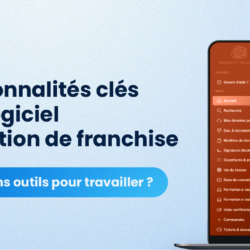
The 5 key features of franchise management software

Franchisors, are you tired of losing candidates due to oversights, wasting time on time-consuming yet essential daily tasks, and looking to optimize your internal operations to grow your network faster and stronger? What are you waiting for to start using franchise management software? Traditional management software allows you to automate various tasks related to your quotes (creating, editing, filing, etc.). It also lets you keep a history of all your prospects. But specialized franchise management software like Cerca raises the bar even higher! Manage everything on a single platform—from candidate recruitment (from lead generation to signing the franchise agreement), manage your network, oversee the openings of your new locations, streamline and centralize order management for your franchisees, and access a whole host of other tools that will quickly become indispensable to your daily operations! In this article, discover the 5 key features of franchise management software. Recruiting Your Future Franchisees A franchisor shouldn’t just aim to attract candidates—they must actively seek them out through various channels: social media, trade shows, advertising campaigns, prospecting, and more. But above all, they must stay on top of it! Managing a wide range of candidates, tracking their progress through the process, and gauging their level of interest can quickly become time-consuming and inefficient if not optimized. Fortunately for you, there are features available to help you recruit and manage your franchisees with ease! This way, you’ll never forget to follow up with a candidate again—and you won’t risk losing a potential future franchisee!  Save valuable time when following up with your candidates thanks to features such as: automatic lead capture, setting up a personalized candidate portal, a franchisor dashboard so you can focus on your follow-up calls and candidate tracking, electronic signatures for your DIPs, and more.  Network Engagement To encourage your franchisees to stay within your network, they need to feel fulfilled so they’ll renew their contracts—which means you need to take good care of them. And for that, nothing beats effective network engagement! Network coordinators are there to serve as a link between franchisees and the franchisor to ensure that everything is running smoothly. This responsibility doesn’t rest entirely on their shoulders but rather on the franchisor’s—that is, yours!  To help you manage your network, you can rely on a franchise management tool. It will give you access to several features to streamline and centralize network operations on a single platform. In particular, you’ll be able to provide a knowledge base containing the operations manual and various documents essential to a franchisee’s day-to-day operations, in all formats (text, interactive catalog, video, etc.). You’ll be able to bring your network together by sharing news and information about upcoming events, organizing sales challenges among different locations, or conducting surveys to improve certain areas or find out what franchisees think of your brand.  Don’t forget what’s essential for the long-term success of your network: communicate not only with your franchisees but also with your network coordinators! Communication is simplified with the features offered by Cerca, including the ability to manage private or public workgroups with discussion threads, or to easily share visit reports via the platform to maintain a connection with the corporate office.  Finally, don’t lose sight of one of your key responsibilities as a franchisor: you have a duty to provide training to your franchisees. With franchise management software, creating training programs has never been easier! Create interactive e-learning courses (text, images, video) with quizzes, tests, and online results, and receive detailed reports once your franchisees have completed the training! Discover Cerca’s management software for managing store openings. Opening multiple locations with the same number of employees, reducing opening timelines, and accelerating the launch of operations, managing the progress of construction work or coordinating all internal and external stakeholders—these are challenges faced by all franchisors. Franchise management software with a module for managing openings and construction projects will truly transform your daily life as a franchisor and help you achieve your goals by opening more locations in less time—and, most importantly, in a more efficient way!  With Cerca’s module, you can centralize all tasks to manage all your store openings with confidence. With a single click, you’ll have an overview of all ongoing projects, followed by details for each new location, with the ability to assign tasks and set up automatic reminders and alerts if deadlines are missed. Task assignments can involve not only internal staff but also external partners (tradespeople, lawyers, architects). You can also create project management templates to plan and guide your teams’ daily work, making it easier to organize store openings on a day-to-day basis and ensuring nothing gets overlooked in the heat of the moment! Numerous customization options are available to help you achieve the most efficient workflow possible.  Online Management of Internal Orders for Your Retail Locations How about centralizing all supplier orders in a single e-commerce interface? This is another feature available with franchise management software. With this tool, your retail locations can order various marketing products (promotional items, apparel, promotional materials) or other items (food, office supplies) from different suppliers 24 hours a day on your own e-commerce site. This saves you time and allows you to offer franchisees a high-value-added service, giving them the convenience of using a single platform. For your development team, it’s a real[…]

franchisor

10 steps to becoming a franchisor

When you have a good business concept and your business is doing fairly well, you may quickly start considering expanding it through franchising: franchising is a relevant means of business expansion, provided you follow key steps that are essential to bringing the project to fruition under the best possible conditions. Asking yourself whether a franchise is feasible is already a step in the development of your business, but not all concepts are viable as franchises, and not all entrepreneurs are cut out to be franchisors. But if that is your primary ambition, you may be wondering how to become a franchisor. First and foremost, it’s important to understand that the franchisor’s lifecycle is similar to the industrial lifecycle, which consists of three stages: prototyping, pre-production, and industrialization. Applied to franchising, this translates to: design, pilot testing, and network development. In this article, discover the 10 steps to becoming a franchisor. Get started with Cerca 1. Understand the franchise market First and foremost, you need to fully understand what you’re getting into, because not everyone can become a franchisor! It’s a major career change, and it’s not for everyone. The first step, therefore, is to ask yourself the right questions by studying the franchise market as a whole and how it works, the pros and cons involved, the new role you’re about to take on, and so on.  2. Formalizing Your Concept: Modeling and Testing Are you well-informed about the franchise market and confident that you have a viable concept? Then it’s time to start formalizing your business model! But be careful: your concept must be new and clearly distinguish itself from what’s already on the market. It must be tested—preferably at multiple locations—to improve and refine it before rolling it out.  You’ll then need to define the franchise unit model (size, location type, etc.) and potentially make adjustments based on the pilot units. In fact, if your concept isn’t sufficiently developed, you’ll need to rework it to improve its financial performance across all locations! This may involve marketing elements, redesigning the original logo and tagline, or restructuring the product and service offerings. This could even extend to redesigning the architecture or developing a “Version 2” of the concept. It’s advisable to wait until the next season before drawing conclusions about the various changes made.  But for the network to function effectively, it’s equally important to consider your strategic organization as a franchisor: development, logistics, central purchasing, etc. And to define your own rules of the game, such as the criteria for assigning territories to franchisees, for example. 3. Ensure the Strength of Your Concept Indeed, experience will demonstrate the strength of your concept. Your business must be profitable, and you must have at least two consecutive positive financial statements for your location to become a pilot unit. This experience—lasting at least two years—allows you to test the concept, but also to understand the key ingredients of your success formula—and the areas for improvement! A simple concept that “works” isn’t always viable as a franchise. You must gain hands-on experience yourself to identify the challenges and understand why your idea works, so you can replicate its success elsewhere. 4. Drafting the Pre-Contractual Information Document (DIP) and the Franchise Agreement Next comes the legal structuring phase. As the franchisor, you’ll need to draft the Pre-Contractual Information Document (more commonly known as the DIP) and the franchise agreement. The DIP contains information about the company and its executives, contact details for current franchisees and those who have left the network within the past 12 months, the term of the contract, financial terms, and so on. It must be provided to the franchisee no later than 20 days before the contract is signed. The franchise agreement lists the general and financial terms of the partnership, the obligations of the franchisor and the franchisee, as well as the terms governing the transfer of know-how and the termination of the agreement. 5. Transferring Know-How Through the Operations Manual The transfer of know-how from the franchisor to the franchisee and the sharing of data related to the know-how used by the franchisor to ensure the long-term success of its network are facilitated through the operations manual. Indeed, to ensure your concept performs consistently across all locations and that your brand’s image isn’t compromised in certain regions, you must ensure that all your future franchisees have access to the same quality of tools and know-how available at the pilot location. After all, it is all these elements that will make up THE recipe for your success. The information gathered from the operational staff at the pilot location will be incorporated into operating manuals, so that the franchisee can operate the concept at the point of sale with confidence and under the same conditions as if they were working at a company-owned location.  Franchisees must understand the methods, criteria, and principles that have driven the commercial success of your concept. They will have access to all this information through the operations manual (or “manop”), which summarizes it in a commercial contract and serves as a legally binding document. 6. Launching Your Franchise Expansion Once you have refined your concept and quantified your investments and objectives, you can begin presenting them to your prospective franchisees. This recruitment phase is a delicate one in the life of a franchise network and crucial to its success.  First, you’ll need to define a recruitment policy aligned with your brand’s objectives and unique characteristics, but above all, you must make the right choices when recruiting your network’s first franchisees, who will serve as your “ambassadors.” They won’t be mere executors but true[…]

DIP

The DIP in franchising: build a relationship of trust!

You should know that, as a franchisor, you are required to have your prospective franchisee sign a DIP—a pre-contractual information document. What are your obligations, and how can you make the most of this document to start your relationship with your franchisee on the right foot? Check out the explanations from the experts at Cerca! What is the DIP? The DIP, or pre-contractual information document, is based on the Doubin Act, which regulates organized business models. Enacted on December 31, 1989, this law allows the franchisor to ensure complete transparency with the franchisee candidate regarding details about the network, and enables the franchisee to make an informed decision and sign the contract with all relevant information in hand. “Any person who makes a trade name, trademark, or brand name available to another person, while requiring that person to commit to exclusivity or quasi--exclusivity in the conduct of their business, is required, prior to the signing of any contract entered into in the mutual interest of both parties, to provide the other party with a document containing truthful information, enabling them to enter into the agreement with full knowledge of the facts.” The law was subsequently codified in 2000 by ordinances under Article L 330-3 of the Commercial Code. What is the purpose of the Pre-Contractual Information Document (DIP) for you and your future franchisee? The Pre-Contractual Information Document allows you to present the franchise network from administrative, financial, legal, and contextual perspectives. It brings transparency to the relationship with your franchisee and provides them with the necessary information to sign the agreement with confidence. It describes the market in which the franchise location will operate. Reviewing and signing the pre-contractual document does not bind either party. Only the franchise agreement formalizes the franchisor-franchisee relationship and its terms.  Give your future franchisee time to review the document and consider their commitment. Even the slightest pressure could come across as misleading and would not work in your favor. Don’t wait until the last minute to provide it, and make sure you’re available to answer any questions they may have.  The franchise candidate should take this time to read the document thoroughly and fully understand everything it entails. Answer their questions clearly; this will only strengthen their trust. To reassure the candidate, don’t limit yourself to providing only the information required by law. Provide the future franchisee with everything that can help them make an informed decision. Supplement the document with details of the project as it stands at this stage. You can entrust the drafting of your DIP to the attorney who advises your network. This will ensure your document complies with legal requirements. Franchise experts can also assist you with this process. All the documents you provide to your prospective franchisee will also demonstrate your brand’s professionalism. Take care to prepare them properly! Your Obligations Regarding the DIP as a Franchisor The Doubin Law is clear: the DIP must contain all the information the franchisee needs to make a decision and sign the franchise agreement. It must therefore be provided to the franchisee at least 20 days before the contract is signed, as required by law. To be compliant, the pre-contractual document must include certain information, as specified in Article 1 of the Doubin Decree of April 1, 1991. The DIP must contain: information about the franchisor (headquarters address, nature of business, legal form, identity of the director(s), share capital); the franchisor’s registration number in the Trade and Companies Register (RCS) or the Trade Register; if applicable, the date and registration number of the trademark in the National Trademark Register; the network parent company’s bank accounts, limited to the five main accounts; the date the company was founded; an overview of its development and evidence of the director’s experience; a list of the companies that are part of the network, particularly those bound by the same type of contract as the one to be offered, along with their addresses; the date these contracts were entered into or renewed; if the network works with more than 50 companies, a list of those that left the network in the year prior to signing and the reason for termination of the contract, as well as all locations where the products or services covered by the contract are offered; the terms of the proposed contract: its term, its conditions for renewal, termination, or assignment, and the scope of exclusivity provisions. The DIP must also include appendices presenting: the annual financial statements for the last two fiscal years or the reports prepared for the last two fiscal years. If you fail to comply with the terms of the law, you face two main penalties: a fine for a 5th-class violation, the cancellation of the contract entered into with the candidate, and the restoration of the situation to its state prior to the contract’s signing. How can Cerca help you implement the DIP? Cerca is a web platform that will help streamline your candidate recruitment process. As soon as candidates show interest, a dedicated candidate portal is created where they can view all the steps and attached documents. To streamline the process, documents—including the DIP—can be signed directly online. The candidate accesses their portal, where you’ve uploaded the relevant documents. This way, the candidate feels guided through each step and can access the various documents at any time, from any device. The interface is customized to match your brand’s visual identity. This immerses the prospective franchisee in your brand’s world from the very start of the recruitment process. Drafting a document[…]

Local digital marketing

Local digital marketing: 7 tips for successful franchising

Local SEO has become a key factor in improving online visibility; its goal is to drive more traffic to your franchisees. Our partner Mobilosoft, a specialist in local digital marketing, has compiled 7 tips to help your franchise network succeed. 1. Website: Ensure a consistent brand image for a top-notch customer experience. One of the goals of a franchise network is to offer a consistent customer experience across all franchise locations, whether in-store or online. Ensure your brand image is always top-notch by using the same branding across the national website and franchisee pages. Ideally, as a brand, you should include a “store locator” page on the national website and provide local pages associated with each franchisee. This ensures consistency in the brand image (theme, font, logo, etc.) and formats names, hours, and other details according to the same template. 2. Website: Incorporate Franchisees’ Unique Details into Their Local Pages Each franchisee has its own unique characteristics, including, of course, the address, but also hours of operation and the products and services offered. Here are 5 recommendations: Optimize the pages for local search: include the name of the neighborhood, town, or region, depending on the franchisee’s service area. This will help the pages rank for these search terms, provided they are properly structured within the webpage’s structured data schema. Include an interactive map (Google Maps or similar) on each local page. This allows users to easily locate the store. Describe accessibility options (public transportation, driving, etc.). Add images of the store, products, and staff. Include customer reviews specific to each franchisee. Certain platforms, such as Trustpilot and Google, can be automatically integrated into website pages using a plugin. 3. Leverage local pages on Google, Facebook, GPS, and industry directories. Create or claim pages for your franchisees on the platforms that generate the most traffic: Google (Business Profile), Facebook (Places), Bing, GPS navigation apps, and relevant industry directories. Note that each platform has its own specific requirements for organizing and linking national and local pages. Plan ahead on how to structure the accounts and access rights between the corporate headquarters and franchisees. 👉 Having pages on these different platforms allows franchisees to reach a wider audience and gain visibility. 4. Standardize data across different platforms Once the pages have been created or claimed, make sure the information is consistent across all platforms. Imagine if, across the website, Google, and Facebook, the opening hours weren’t up to date—especially for a holiday. Consumers wouldn’t know which information to trust, which would slow down their decision-making and purchasing process. 5. Highlight products and services specific to each franchisee. Although franchisees generally offer similar items, they have their own local specialties depending on the region, season, and other factors. Take advantage of the website’s local pages, as well as Google, Facebook, and other platforms, to promote these offerings. 💡 It’s a good idea to adjust your featured products based on seasons, occasions, events, and promotions.  6. Encourage local content strategies Local pages serve two purposes: to increase visibility through search engine optimization (SEO) and to generate positive engagement (customer reviews, comments, photos, etc.) to convert other website visitors. Depending on the size and brand recognition of the network, as well as its authority in the industry, various communication strategies can be applied to local pages. 🔍 Keep in mind that each platform (Google, Facebook, Instagram, etc.) has its own unique characteristics, of course. For example: On social media platforms like Facebook or Instagram, content specific to the store’s news (promotions, events, staff, etc.) generates on average 9 times more interactions (likes, comments, shares, etc.) than national “branded” content. 💡 Local content for a local audience. 7. Boost franchisees’ visibility with local Google and Facebook ads. The little extra? Boost your Facebook posts and invest in local Google Ads campaigns. These campaigns are specifically designed for local businesses looking to promote their locations easily and within a budget that works for them. This can help franchisees easily gain visibility within a specific radius around their location. Conclusion on Local Digital Marketing for a Franchise Local digital marketing is a powerful tool for a franchise network that organizes itself to take advantage of it. Centralize or decentralize day-to-day management between the corporate headquarters and franchisees, depending on your needs. Collaborate using tools to effortlessly manage a high-performing online presence. Ensure consistent communication that puts the local community at the center to drive more traffic and revenue for franchisees 🎯 Author, Mobilosoft, Article Title, Local Digital Marketing: 7 Tips for Franchise Success, Available on the Mobilosoft blog You might also be interested in these articles: