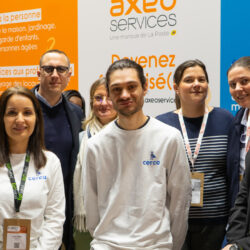
Une belle année vient de s’écouler et nous avons beaucoup de projets pour 2023 ! Avant de se lancer plein d’ambition en 2023, nous jugeons qu’il est toujours bon de prendre du recul sur l’année passée. En route pour une rétrospective de 2022. Notre année en chiffres La plateforme collaborative “tout-en-une” comme nous aimons le dire, réservée aux franchises, compte désormais plus de 250 enseignes à travers 100 pays, sur 5 continents. Cela fait plus de 300 000 utilisateurs quotidiens, et un total de 6 langues disponibles sur Cerca ex Franchise On Cloud. Nous sommes fiers de nos collaborations et de nos clients, que nous avons la chance d’assister dans leur quête de croissance. Selon une enquête annuelle réalisée dans le cadre du renouvellement de notre certification ISO 9001, nous avons récolté plus de 98 % de satisfaction client. Le Franchise Development Report 2022, pour bien commencer l’année L’année dernière avait commencé en chiffre également, puisque nous avions le sentiment que nous manquions de datas sur le secteur de la Franchise. Grâce à nos années d’expériences, nous étions très bien placés pour créer le Franchise Development Report en partenariat avec EverFruit Digital. Le webinaire est toujours disponible, ainsi que l’enquête. Nous continuons d’analyser les comportements consommateurs afin de fournir le service le plus adapté possible aux besoins des franchisés et des franchiseurs, notamment en matière de recrutement de candidats à la franchise. Les Salons et Forums de la Franchise Annuellement ont lieu deux grands événements qui réunissent tous les acteurs du secteur de la franchise. Le premier a lieu à Paris, la Franchise Expo est une véritable plateforme de rencontre entre entrepreneurs, pendant 4 jours l’écosystème de la Franchise français et mondial se retrouve sur Franchise Expo Paris. Le deuxième, le Forum Franchise en octobre à Lyon, réunit plus de 160 enseignes qui souhaitent accélérer leur développement en recrutant de nouveaux franchisés. Ce salon s’adresse prioritairement aux franchiseurs, aux enseignes du commerce organisé et aux experts du secteur de la franchise. Nous sommes ravis d’avoir pu y rencontrer les franchiseurs et nos clients, et de leur avoir exposé notre solution. Une application mobile pour les franchiseurs et les franchisés Une nouvelle version de notre application mobile est disponible depuis cette année. Elle possède toutes les fonctionnalités du quotidien pour communiquer au sein du réseau. Disponible sur Android et iPhone, elle permet d’avoir son réseau à portée de main. Cela passe par toutes les actualités avec commentaires et likes, l’annuaire interactif, la messagerie, les groupes de travail et notifications, et même les audits et rapports de visite depuis cet été ! Venez découvrir Cerca Le marketing digital local intégré au logiciel de gestion L’année continue et nos investissements aussi, toujours dans une volonté d’accompagner nos clients dans leur marketing local, mais aussi dans la communication au sein même du réseau de franchise. Retour sur les différentes fonctionnalités implémentées au cours de l’année passée : Focus marketing local avec le partenariat Cerca x Mobilosoft Mobilosoft vient compléter l’offre de service de Cerca sur le marketing digital local. Elle permet de générer du trafic web-to-store, et répond au constat que près de 80 % des consommateurs ayant effectué une recherche locale ont visité un magasin dans un rayon de 8 km (Hubspot Marketing Statistics 2021). Elle vient consolider l’offre de formation, et propose une plateforme collaborative de marketing digital aux réseaux de franchises et leurs franchisés, pour organiser et gérer au mieux leur e-réputation. La communication au sein du réseau de franchise La vie du réseau et celle des animateurs a été simplifiée grâce à nos nouvelles fonctionnalités de communication au sein du réseau. Les actualités peuvent désormais être classées par implantation, les rapports de visite peuvent être dupliqués à partir d’un rapport déjà existant, sans pour autant perdre les commentaires et le suivi. Aussi, pour mettre en place les plans d’action lors d’un rapport de visite, un nouvel onglet existe qui permet de vérifier si un plan d’action est déjà en cours, et évite ainsi les doublons. Au niveau de la cartographie, on peut dorénavant fusionner les zones de chalandise pour une implantation. Le marqueur des implantations peut aussi être invisible. Ces nouvelles fonctionnalités fluidifient l’utilisation de la plateforme et facilitent le travail des animateurs réseau. Les événements changent ! Nouveauté aussi cette année : Zoom est à présent disponible pour effectuer des visioconférences, tout comme Google Meet. Après Teams et GoToMeeting, il est désormais possible de faire des visios avec les célèbres plateformes Zoom et Google Meet via Cerca. Par ailleurs, depuis cette année, un seul mail suffit, au lieu de deux auparavant, le premier mail contient déjà le lien pour la visioconférence, et sera aussi disponible sur l’événement dans votre calendrier. En un clic, vous rejoignez la visio ! Retour sur les grandes tendances consommateurs de 2022 Le consommateur va effectuer sa recherche en ligne avant d’éventuellement convertir en local, comme nous le disions dans cet article : les requêtes de type « ouvert maintenant à proximité » ont bondi de plus de + 400 % sur un an à travers le monde. Le shopping est de plus en plus omnicanal : réseaux sociaux, web, app, newsletter entre autres. Mais le constat est tel qu’on se rend compte que les consommateurs cherchent surtout de la valeur ajoutée. Ils scrutent les offres et les promotions, en plus de s’attarder sur les valeurs de l’entreprise, et vérifier s’ils sont bien alignés. Enfin, mais pas des moindres, sur les réseaux, les micro-influenceurs ont le vent en poupe, les courtes vidéos avec beaucoup de valeur ajoutée convertissent de plus en plus. Ceci dit, de toutes les tendances, une seule ne bouge pas : la position zéro en SEO Local reste le levier le plus efficace. Pour suivre les tendances consommateurs et activer le marketing local, nous avons aussi lancé un partenariat avec DeepReach. Les zones de chalandise sont prédéfinies, ce qui permet d’activer un ensemble de groupe de publicités digitales locales, suivant les besoins du franchisé. En résumé, nous sommes très heureux de l’année qui[…]