franchise management software

The 5 key features of franchise management software

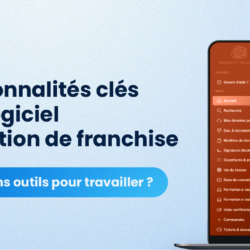
Franchisors, are you tired of losing candidates due to oversights, wasting time on time-consuming yet essential daily tasks, and looking to optimize your internal operations to grow your network faster and stronger? What are you waiting for to start using franchise management software? Traditional management software allows you to automate various tasks related to your quotes (creating, editing, filing, etc.). It also lets you keep a history of all your prospects. But specialized franchise management software like Cerca raises the bar even higher! Manage everything on a single platform—from candidate recruitment (from lead generation to signing the franchise agreement), manage your network, oversee the openings of your new locations, streamline and centralize order management for your franchisees, and access a whole host of other tools that will quickly become indispensable to your daily operations! In this article, discover the 5 key features of franchise management software. Recruiting Your Future Franchisees A franchisor shouldn’t just aim to attract candidates—they must actively seek them out through various channels: social media, trade shows, advertising campaigns, prospecting, and more. But above all, they must stay on top of it! Managing a wide range of candidates, tracking their progress through the process, and gauging their level of interest can quickly become time-consuming and inefficient if not optimized. Fortunately for you, there are features available to help you recruit and manage your franchisees with ease! This way, you’ll never forget to follow up with a candidate again—and you won’t risk losing a potential future franchisee!  Save valuable time when following up with your candidates thanks to features such as: automatic lead capture, setting up a personalized candidate portal, a franchisor dashboard so you can focus on your follow-up calls and candidate tracking, electronic signatures for your DIPs, and more.  Network Engagement To encourage your franchisees to stay within your network, they need to feel fulfilled so they’ll renew their contracts—which means you need to take good care of them. And for that, nothing beats effective network engagement! Network coordinators are there to serve as a link between franchisees and the franchisor to ensure that everything is running smoothly. This responsibility doesn’t rest entirely on their shoulders but rather on the franchisor’s—that is, yours!  To help you manage your network, you can rely on a franchise management tool. It will give you access to several features to streamline and centralize network operations on a single platform. In particular, you’ll be able to provide a knowledge base containing the operations manual and various documents essential to a franchisee’s day-to-day operations, in all formats (text, interactive catalog, video, etc.). You’ll be able to bring your network together by sharing news and information about upcoming events, organizing sales challenges among different locations, or conducting surveys to improve certain areas or find out what franchisees think of your brand.  Don’t forget what’s essential for the long-term success of your network: communicate not only with your franchisees but also with your network coordinators! Communication is simplified with the features offered by Cerca, including the ability to manage private or public workgroups with discussion threads, or to easily share visit reports via the platform to maintain a connection with the corporate office.  Finally, don’t lose sight of one of your key responsibilities as a franchisor: you have a duty to provide training to your franchisees. With franchise management software, creating training programs has never been easier! Create interactive e-learning courses (text, images, video) with quizzes, tests, and online results, and receive detailed reports once your franchisees have completed the training! Discover Cerca’s management software for managing store openings. Opening multiple locations with the same number of employees, reducing opening timelines, and accelerating the launch of operations, managing the progress of construction work or coordinating all internal and external stakeholders—these are challenges faced by all franchisors. Franchise management software with a module for managing openings and construction projects will truly transform your daily life as a franchisor and help you achieve your goals by opening more locations in less time—and, most importantly, in a more efficient way!  With Cerca’s module, you can centralize all tasks to manage all your store openings with confidence. With a single click, you’ll have an overview of all ongoing projects, followed by details for each new location, with the ability to assign tasks and set up automatic reminders and alerts if deadlines are missed. Task assignments can involve not only internal staff but also external partners (tradespeople, lawyers, architects). You can also create project management templates to plan and guide your teams’ daily work, making it easier to organize store openings on a day-to-day basis and ensuring nothing gets overlooked in the heat of the moment! Numerous customization options are available to help you achieve the most efficient workflow possible.  Online Management of Internal Orders for Your Retail Locations How about centralizing all supplier orders in a single e-commerce interface? This is another feature available with franchise management software. With this tool, your retail locations can order various marketing products (promotional items, apparel, promotional materials) or other items (food, office supplies) from different suppliers 24 hours a day on your own e-commerce site. This saves you time and allows you to offer franchisees a high-value-added service, giving them the convenience of using a single platform. For your development team, it’s a real[…]

franchisor

10 steps to becoming a franchisor

When you have a good business concept and your business is doing fairly well, you may quickly start considering expanding it through franchising: franchising is a relevant means of business expansion, provided you follow key steps that are essential to bringing the project to fruition under the best possible conditions. Asking yourself whether a franchise is feasible is already a step in the development of your business, but not all concepts are viable as franchises, and not all entrepreneurs are cut out to be franchisors. But if that is your primary ambition, you may be wondering how to become a franchisor. First and foremost, it’s important to understand that the franchisor’s lifecycle is similar to the industrial lifecycle, which consists of three stages: prototyping, pre-production, and industrialization. Applied to franchising, this translates to: design, pilot testing, and network development. In this article, discover the 10 steps to becoming a franchisor. Get started with Cerca 1. Understand the franchise market First and foremost, you need to fully understand what you’re getting into, because not everyone can become a franchisor! It’s a major career change, and it’s not for everyone. The first step, therefore, is to ask yourself the right questions by studying the franchise market as a whole and how it works, the pros and cons involved, the new role you’re about to take on, and so on.  2. Formalizing Your Concept: Modeling and Testing Are you well-informed about the franchise market and confident that you have a viable concept? Then it’s time to start formalizing your business model! But be careful: your concept must be new and clearly distinguish itself from what’s already on the market. It must be tested—preferably at multiple locations—to improve and refine it before rolling it out.  You’ll then need to define the franchise unit model (size, location type, etc.) and potentially make adjustments based on the pilot units. In fact, if your concept isn’t sufficiently developed, you’ll need to rework it to improve its financial performance across all locations! This may involve marketing elements, redesigning the original logo and tagline, or restructuring the product and service offerings. This could even extend to redesigning the architecture or developing a “Version 2” of the concept. It’s advisable to wait until the next season before drawing conclusions about the various changes made.  But for the network to function effectively, it’s equally important to consider your strategic organization as a franchisor: development, logistics, central purchasing, etc. And to define your own rules of the game, such as the criteria for assigning territories to franchisees, for example. 3. Ensure the Strength of Your Concept Indeed, experience will demonstrate the strength of your concept. Your business must be profitable, and you must have at least two consecutive positive financial statements for your location to become a pilot unit. This experience—lasting at least two years—allows you to test the concept, but also to understand the key ingredients of your success formula—and the areas for improvement! A simple concept that “works” isn’t always viable as a franchise. You must gain hands-on experience yourself to identify the challenges and understand why your idea works, so you can replicate its success elsewhere. 4. Drafting the Pre-Contractual Information Document (DIP) and the Franchise Agreement Next comes the legal structuring phase. As the franchisor, you’ll need to draft the Pre-Contractual Information Document (more commonly known as the DIP) and the franchise agreement. The DIP contains information about the company and its executives, contact details for current franchisees and those who have left the network within the past 12 months, the term of the contract, financial terms, and so on. It must be provided to the franchisee no later than 20 days before the contract is signed. The franchise agreement lists the general and financial terms of the partnership, the obligations of the franchisor and the franchisee, as well as the terms governing the transfer of know-how and the termination of the agreement. 5. Transferring Know-How Through the Operations Manual The transfer of know-how from the franchisor to the franchisee and the sharing of data related to the know-how used by the franchisor to ensure the long-term success of its network are facilitated through the operations manual. Indeed, to ensure your concept performs consistently across all locations and that your brand’s image isn’t compromised in certain regions, you must ensure that all your future franchisees have access to the same quality of tools and know-how available at the pilot location. After all, it is all these elements that will make up THE recipe for your success. The information gathered from the operational staff at the pilot location will be incorporated into operating manuals, so that the franchisee can operate the concept at the point of sale with confidence and under the same conditions as if they were working at a company-owned location.  Franchisees must understand the methods, criteria, and principles that have driven the commercial success of your concept. They will have access to all this information through the operations manual (or “manop”), which summarizes it in a commercial contract and serves as a legally binding document. 6. Launching Your Franchise Expansion Once you have refined your concept and quantified your investments and objectives, you can begin presenting them to your prospective franchisees. This recruitment phase is a delicate one in the life of a franchise network and crucial to its success.  First, you’ll need to define a recruitment policy aligned with your brand’s objectives and unique characteristics, but above all, you must make the right choices when recruiting your network’s first franchisees, who will serve as your “ambassadors.” They won’t be mere executors but true[…]

DIP

The DIP in franchising: build a relationship of trust!

You should know that, as a franchisor, you are required to have your prospective franchisee sign a DIP—a pre-contractual information document. What are your obligations, and how can you make the most of this document to start your relationship with your franchisee on the right foot? Check out the explanations from the experts at Cerca! What is the DIP? The DIP, or pre-contractual information document, is based on the Doubin Act, which regulates organized business models. Enacted on December 31, 1989, this law allows the franchisor to ensure complete transparency with the franchisee candidate regarding details about the network, and enables the franchisee to make an informed decision and sign the contract with all relevant information in hand. “Any person who makes a trade name, trademark, or brand name available to another person, while requiring that person to commit to exclusivity or quasi--exclusivity in the conduct of their business, is required, prior to the signing of any contract entered into in the mutual interest of both parties, to provide the other party with a document containing truthful information, enabling them to enter into the agreement with full knowledge of the facts.” The law was subsequently codified in 2000 by ordinances under Article L 330-3 of the Commercial Code. What is the purpose of the Pre-Contractual Information Document (DIP) for you and your future franchisee? The Pre-Contractual Information Document allows you to present the franchise network from administrative, financial, legal, and contextual perspectives. It brings transparency to the relationship with your franchisee and provides them with the necessary information to sign the agreement with confidence. It describes the market in which the franchise location will operate. Reviewing and signing the pre-contractual document does not bind either party. Only the franchise agreement formalizes the franchisor-franchisee relationship and its terms.  Give your future franchisee time to review the document and consider their commitment. Even the slightest pressure could come across as misleading and would not work in your favor. Don’t wait until the last minute to provide it, and make sure you’re available to answer any questions they may have.  The franchise candidate should take this time to read the document thoroughly and fully understand everything it entails. Answer their questions clearly; this will only strengthen their trust. To reassure the candidate, don’t limit yourself to providing only the information required by law. Provide the future franchisee with everything that can help them make an informed decision. Supplement the document with details of the project as it stands at this stage. You can entrust the drafting of your DIP to the attorney who advises your network. This will ensure your document complies with legal requirements. Franchise experts can also assist you with this process. All the documents you provide to your prospective franchisee will also demonstrate your brand’s professionalism. Take care to prepare them properly! Your Obligations Regarding the DIP as a Franchisor The Doubin Law is clear: the DIP must contain all the information the franchisee needs to make a decision and sign the franchise agreement. It must therefore be provided to the franchisee at least 20 days before the contract is signed, as required by law. To be compliant, the pre-contractual document must include certain information, as specified in Article 1 of the Doubin Decree of April 1, 1991. The DIP must contain: information about the franchisor (headquarters address, nature of business, legal form, identity of the director(s), share capital); the franchisor’s registration number in the Trade and Companies Register (RCS) or the Trade Register; if applicable, the date and registration number of the trademark in the National Trademark Register; the network parent company’s bank accounts, limited to the five main accounts; the date the company was founded; an overview of its development and evidence of the director’s experience; a list of the companies that are part of the network, particularly those bound by the same type of contract as the one to be offered, along with their addresses; the date these contracts were entered into or renewed; if the network works with more than 50 companies, a list of those that left the network in the year prior to signing and the reason for termination of the contract, as well as all locations where the products or services covered by the contract are offered; the terms of the proposed contract: its term, its conditions for renewal, termination, or assignment, and the scope of exclusivity provisions. The DIP must also include appendices presenting: the annual financial statements for the last two fiscal years or the reports prepared for the last two fiscal years. If you fail to comply with the terms of the law, you face two main penalties: a fine for a 5th-class violation, the cancellation of the contract entered into with the candidate, and the restoration of the situation to its state prior to the contract’s signing. How can Cerca help you implement the DIP? Cerca is a web platform that will help streamline your candidate recruitment process. As soon as candidates show interest, a dedicated candidate portal is created where they can view all the steps and attached documents. To streamline the process, documents—including the DIP—can be signed directly online. The candidate accesses their portal, where you’ve uploaded the relevant documents. This way, the candidate feels guided through each step and can access the various documents at any time, from any device. The interface is customized to match your brand’s visual identity. This immerses the prospective franchisee in your brand’s world from the very start of the recruitment process. Drafting a document[…]

Local digital marketing

Local digital marketing: 7 tips for successful franchising

Local SEO has become a key factor in improving online visibility; its goal is to drive more traffic to your franchisees. Our partner Mobilosoft, a specialist in local digital marketing, has compiled 7 tips to help your franchise network succeed. 1. Website: Ensure a consistent brand image for a top-notch customer experience. One of the goals of a franchise network is to offer a consistent customer experience across all franchise locations, whether in-store or online. Ensure your brand image is always top-notch by using the same branding across the national website and franchisee pages. Ideally, as a brand, you should include a “store locator” page on the national website and provide local pages associated with each franchisee. This ensures consistency in the brand image (theme, font, logo, etc.) and formats names, hours, and other details according to the same template. 2. Website: Incorporate Franchisees’ Unique Details into Their Local Pages Each franchisee has its own unique characteristics, including, of course, the address, but also hours of operation and the products and services offered. Here are 5 recommendations: Optimize the pages for local search: include the name of the neighborhood, town, or region, depending on the franchisee’s service area. This will help the pages rank for these search terms, provided they are properly structured within the webpage’s structured data schema. Include an interactive map (Google Maps or similar) on each local page. This allows users to easily locate the store. Describe accessibility options (public transportation, driving, etc.). Add images of the store, products, and staff. Include customer reviews specific to each franchisee. Certain platforms, such as Trustpilot and Google, can be automatically integrated into website pages using a plugin. 3. Leverage local pages on Google, Facebook, GPS, and industry directories. Create or claim pages for your franchisees on the platforms that generate the most traffic: Google (Business Profile), Facebook (Places), Bing, GPS navigation apps, and relevant industry directories. Note that each platform has its own specific requirements for organizing and linking national and local pages. Plan ahead on how to structure the accounts and access rights between the corporate headquarters and franchisees. 👉 Having pages on these different platforms allows franchisees to reach a wider audience and gain visibility. 4. Standardize data across different platforms Once the pages have been created or claimed, make sure the information is consistent across all platforms. Imagine if, across the website, Google, and Facebook, the opening hours weren’t up to date—especially for a holiday. Consumers wouldn’t know which information to trust, which would slow down their decision-making and purchasing process. 5. Highlight products and services specific to each franchisee. Although franchisees generally offer similar items, they have their own local specialties depending on the region, season, and other factors. Take advantage of the website’s local pages, as well as Google, Facebook, and other platforms, to promote these offerings. 💡 It’s a good idea to adjust your featured products based on seasons, occasions, events, and promotions.  6. Encourage local content strategies Local pages serve two purposes: to increase visibility through search engine optimization (SEO) and to generate positive engagement (customer reviews, comments, photos, etc.) to convert other website visitors. Depending on the size and brand recognition of the network, as well as its authority in the industry, various communication strategies can be applied to local pages. 🔍 Keep in mind that each platform (Google, Facebook, Instagram, etc.) has its own unique characteristics, of course. For example: On social media platforms like Facebook or Instagram, content specific to the store’s news (promotions, events, staff, etc.) generates on average 9 times more interactions (likes, comments, shares, etc.) than national “branded” content. 💡 Local content for a local audience. 7. Boost franchisees’ visibility with local Google and Facebook ads. The little extra? Boost your Facebook posts and invest in local Google Ads campaigns. These campaigns are specifically designed for local businesses looking to promote their locations easily and within a budget that works for them. This can help franchisees easily gain visibility within a specific radius around their location. Conclusion on Local Digital Marketing for a Franchise Local digital marketing is a powerful tool for a franchise network that organizes itself to take advantage of it. Centralize or decentralize day-to-day management between the corporate headquarters and franchisees, depending on your needs. Collaborate using tools to effortlessly manage a high-performing online presence. Ensure consistent communication that puts the local community at the center to drive more traffic and revenue for franchisees 🎯 Author, Mobilosoft, Article Title, Local Digital Marketing: 7 Tips for Franchise Success, Available on the Mobilosoft blog You might also be interested in these articles:

animate a network

Our experts' 5 tips for running a franchise network

Starting a business and growing it as a franchise is a decision that requires careful consideration of several factors. Managing your network is, of course, one of them. It’s not enough to simply recruit new franchisees and then be there when needed. Managing a network is a genuine skill that you can highlight when searching for candidates. How can you optimize your network management and showcase it during the recruitment process? Our Cerca experts will guide you through this challenging yet rewarding mission. Why is managing your network essential? Your network is the strength of your business. You don’t have to look far back to see its value: the retail locations that weathered the COVID crisis most easily were the franchisees. However, the conditions for success must be in place. A network that works is an active network! Effective network management empowers retail locations to achieve their goals, both in terms of revenue and local market presence. To ensure optimal network management, it’s important for the network headquarters to implement a strategy. Define the goals you’re aiming for—both for yourself and for your franchisees’ retail locations. Within a clear framework, you’ll inspire and motivate franchisees and their teams on the ground. Effective network coordination starts with effective coordinators To energize the network and ensure the essential alignment between the network headquarters and the retail locations, you cannot do without a network coordinator. Their number and organization will depend on the size of your network and its geographic coverage. In any case, the mission remains broadly the same: managing the onboarding of new franchisees, ensuring compliance with the processes outlined in the contract, supporting franchisees in their operations, and overseeing the proper implementation of various strategies and the brand image. Your network coordinators represent your brand to the various franchisees and serve as the primary point of contact. They must therefore be thoroughly immersed in the brand’s world, its values, and its history so they can convey these on the ground through their recommendations. Find the right balance between autonomy and hands-on support. Managing a network is a real balancing act! Your franchisees operate within local dynamics, in different markets with their own specific characteristics, constraints, and opportunities. You won’t be able to apply a one-size-fits-all strategy to every aspect of every location. Give your franchisees a measured degree of autonomy to allow them to operate in a context they likely know better than you do. Clearly define the non-negotiable elements and the framework within which they can exercise this autonomy.  Similarly, a network coordinator won’t support a new franchisee in the same way as one who has been in the network for several years. Adapt to your franchisees’ local needs and be present where their expectations lie. Build a true community around your brand. Use local success stories to inspire the entire network. Effective communication and tailored tools will allow you to collect all performance data from your locations. Thus, within the framework you’ve established with your franchisees, some may develop strategies that will benefit the entire network. Collect this data and draw inspiration from these successes: create templates for documents and communication plans based on local initiatives, which you can then share with all your franchisees. Share best practices! One of the coordinator’s key responsibilities is monitoring the retail locations. During visits—and throughout the year—collect data and measure the performance of the various retail locations. Conduct comparative analyses and share them with the entire network. Beyond providing a benchmark for your franchisees, these figures also help boost their motivation. Foster a sense of belonging among your franchisees When a franchisee joins a network, they embrace its values, history, and strengths. To foster this sense of belonging and turn your franchisees into true ambassadors for your brand, create a family-like atmosphere around it.  In practice, it is the interactions—and their quality—that amplify this spirit. Schedule get-togethers once or several times a year. These seminars allow network members to meet, stay connected, and come together to discuss new issues or challenges.  You can also create an internal online space for the network and send out a newsletter to your franchisees. This will keep them informed about all the latest news regarding the brand and upcoming developments. In this way, you’ll build a community of franchisees who are proud to be part of your brand.  Implement an effective tool for managing and facilitating your network As the network expands, it becomes difficult to collect data and communicate using standard tools. A centralized system is essential at this point. It is precisely to create a better experience for your network members that we developed the Cerca tool. Designed as a true internal social network, the platform allows you to share information with all members of your network or with a selected group. Document management, online signatures, news—everything is designed for smooth and effective communication. Similarly, Cerca centralizes all information regarding retail locations and their performance. You can easily share your expertise through documents that are shared and always available to your franchisees. Provide them with a knowledge base as well as training resources. An essential tool for managing your network! Conclusion: Lead, manage, and excel! A significant part of your network’s success lies in how well it is managed. To[…]

Zoom now available

Zoom now available for videoconferencing!

Après Teams et GoToMeeting, le célèbre logiciel Zoom est maintenant disponible sur Cerca. Une communication encore plus fluide au sein de votre réseau Vous pouvez désormais lancer vos réunions Zoom directement depuis votre espace de travail sur la plateforme. Cette nouvelle intégration s’inscrit dans notre volonté de centraliser vos outils au même endroit, pour vous faire gagner en simplicité et en efficacité. Plus besoin de passer d’une application à l’autre : tout se fait depuis Cerca, dans un environnement structuré, pensé pour la gestion de vos opérations réseau. Une étape de paramétrage à prévoir La connexion de votre compte Zoom à Cerca nécessite une étape supplémentaire de synchronisation. Rassurez-vous, c’est une procédure simple, mais indispensable pour garantir la sécurité et la bonne gestion des accès. En cas de besoin, votre Customer Success Manager est à votre disposition pour vous guider. Bonne visio à toutes et à tous ! 🤗 Ces articles peuvent vous intéresser :

new features helpcenter videoconferencing events

Events and videoconferences: invitations made easy. Discover the new Help Center

Découvrez les optimisations réalisées sur les invitations aux événements classiques et en visioconférence : 📧 Répondre directement depuis sa boite mail aux invitations sans bouger ! (la fonction RSVP) 🎦 Invitation à une visioconférence : un seul mail sinon rien ! 📢 « Help Center » devient « Support client » pour vous guider davantage 📧 Événements : répondre à une invitation directement par mail (la fonction RSVP) Il n’est plus nécessaire de se connecter à votre espace sur la plateforme pour valider ou non votre participation à un événement. En effet, vous pouvez indiquer votre participation ou non grâce au RSVP intégré au mail d’invitation.  Dans l’attente de votre réponse, cet événement se retrouvera dans le calendrier de votre client mail.  Ci-dessous, un exemple de cette utilisation sur Outlook : Une fois l’invitation acceptée, vous pourrez retrouver à tout moment le mail rattaché à cet événement dans votre calendrier. Ainsi, vous serez en mesure de rejoindre la page de l’événement en cliquant sur le bouton “PARTICIPER”. Pour retrouver ce bouton, rendez-vous dans le mail d’invitation lié à l’événement dans votre calendrier de mail. 🎦 Événements en visioconférence : un seul mail suffit En rapport avec le processus d’invitation par mail expliqué juste au-dessus, le processus de mail pour la création d’événement avec visioconférence a également changé pour être simplifié. En effet, les invités à une visioconférence ne reçoivent plus qu’un seul mail (au lieu de deux mails auparavant : le premier pour l’invitation, le deuxième pour la connexion) . Cet unique mail contient à présent déjà le lien pour accéder à la page de l’événement en visioconférence. Nous vous rappelons que vous pouvez retrouver à tout moment le mail qui contient le lien pour vous connecter à la page de l’événement sur votre plateforme. Pour ce faire, il suffit de cliquer sur l’événement concerné dans votre calendrier de mail. Lorsque l’organisateur de l’événement aura généré la visioconférence (Teams ou Zoom), les invités de l’événement n’auront plus qu’à cliquer sur le bouton « Joindre la visioconférence » depuis la page de l’événement.  Cela permettra d’éviter que les personnes qui n’avaient pas accepté de participer à un événement avec le premier mail ne reçoivent pas le deuxième mail contenant le lien pour la visioconférence. 📢 Help Center : Support client Le Menu “Help Center” devient “Support Client”, mais pas d’inquiétude, sa fonction reste la même. On a juste regroupé les tutoriels et notre numéro d’assistance au même endroit pour être certain que vous saurez comment nous contacter ! À très vite pour de nouvelles fonctionnalités ! 🤗 En attendant les prochaines nouveautés de notre outil, un peu de lecture 👇  Ces articles peuvent vous intéresser :

Franchisees

Franchisors, find your future franchisees!

Choosing a network-based business model means recruiting new franchisees. There can be no growth without serious candidates. Finding prospective franchisees is therefore a fundamental challenge that every franchise faces. How do you find candidates? Where should you look for them, and how can you attract them? Follow our guide to recruiting franchise candidates! Your franchise concept must be attractive This is, of course, the first prerequisite for effective franchisee recruitment. Be the one being courted, not the one doing the courting! For candidates to flock to your network, your concept must be appealing. To achieve this, it must align with market demands by achieving a perfect product-market fit. A serious candidate will shortlist a few brands, including yours. To ensure their final choice is your concept, you’ll need to highlight as many key aspects as possible. Transparency is a good indicator of future success for a prospective franchisee. Make customer testimonials, your franchisee selection process, what you expect from your future partners, your network’s performance metrics, and more readily visible. Marketing to Recruit Your New Franchisees Your concept exists in the market and meets the needs of a certain segment of entrepreneurs through its unique features. But these features still need to be known and highlighted! This is where marketing comes into play: it will help connect your concept with the entrepreneurs for whom it is a solution. Don’t try to target every entrepreneur. Here’s a simple rule to remember: if you try to reach everyone, you’ll reach no one… Who is your concept aimed at? What are the profiles of the entrepreneurs for whom it’s particularly relevant? What are the needs of these candidates? Before you start recruiting, ask yourself what entrepreneurs are looking for in a franchise and how your brand can address those needs. Passion, profitability, a life-changing opportunity—there are many reasons to start a franchise. Focus on the reasons that apply to your prospective franchisees. Don’t be afraid to be selective or to narrow your focus too much. The more you define your scope, the more qualified and serious your candidates will be. Traditional channels still work for recruiting franchisees. Be present and visible at franchise trade shows. Every year in France, several trade shows dedicated exclusively to franchising take place throughout the year. Prospective franchisees come to these events to meet with network leaders, discover new concepts, or find financial or legal partners. By having a visible presence at these trade shows, you create a prime opportunity to connect with your target audience. Pay special attention to your booth. Beyond customizing it with your brand’s colors, offer visitors a unique and memorable experience. You’ll impress them with your expertise and demonstrate your brand’s dynamism and constant innovation. Platforms for connecting franchisors and franchisees These websites function like directories: they provide a space for you to present your network and highlight the factors that set you apart from the competition. Prospective franchisees can then contact you directly through the platform.  These platforms (Toute la Franchise, L’Observatoire de la Franchise, etc.) help attract a large number of candidates. Because it’s so easy to submit an application, candidates aren’t always highly qualified. Some prospective franchisees contact multiple brands with a single click. Set aside time to select the best candidates. Take the web by storm with social media! LinkedIn and Facebook lead the way. A candidate’s very first research takes place online. Franchise or not? Which brands? Which industries? A prospective franchisee will turn to the web to find initial answers to these questions. Don’t let others provide them! Be the authority in your market by positioning yourself along the candidates’ path.  Just like Tom Thumb, place pebbles along the candidates’ path to lead them to your brand. Social media is a primary point of contact. Many entrepreneurs use it to search for opportunities. LinkedIn remains, of course, the leading B2B social network. Facebook also contains interesting profiles depending on the sector you’re in. Be active to make your brand visible: Create a business page, share news about your network, your performance metrics, new locations, and everything that sets you apart in the market. Also be active in engaging with posts from other players in the franchise industry. Social media is based on the principle of sharing: the more you give, the more visible you are, and the more engagement you’ll get on your posts. Comment and like! LinkedIn particularly values personal accounts. Prioritize them for your communication.  Your posts should answer your target audience’s questions. That’s the whole point of having researched the needs of the candidates you’re looking for. Now is the time to put that knowledge to use and show that you’re the brand that will meet those needs through regular posts. Social Media Advertising to Recruit Franchisees Candidates are looking for the ideal franchise. By running a sponsored post, you can position yourself as a viable option in the eyes of your target audience. By pinpointing the needs they face, you become the solution. Opening a franchise should be seen as a career milestone for your candidates. Social media advertising has another advantage: it allows you to precisely target the profiles to whom you’ll show the sponsored post—by geographic area, industry, interests, and more. This increases your chances of attracting candidates who are a good fit for your brand—and therefore more qualified. A franchise-specific recruitment website to attract candidates Combined with social media, a brand website dedicated specifically to recruitment can literally boost your candidate outreach. Provide all the information a future franchisee[…]

franchise mobile application

A new mobile application for exchanges with your network.

The new version of our mobile app is now available. It includes the key everyday features for interacting within your network (News with comments and likes, Interactive Directory, Messaging, Work Groups, and Notifications), while all other features remain available in a responsive design. What’s coming next to the mobile app? Audits and visit reports before summer break for program leaders! The super-handy “exchange memo” feature before the end of May! The essential features of the “Candidate Recruitment” module before fall! This mobile app uses your brand’s colors to personalize the user experience (Apple does not yet allow a brand-specific icon for two completely identical apps…). Here’s a reminder of the steps to easily download and set up your personal account on the mobile app. __________ To download the Franchise On Cloud mobile app on Android or iPhone, please follow the steps below: 1. On your smartphone’s home screen, locate the Play Store icon. If you’re using an iPhone, find the “App Store” app and tap it to open it. 2. You’ll be taken to the App Store’s home screen. In the search bar, type “franchise on cloud.” In the list of apps, you’ll find the Franchise On Cloud icon. Tap it. 3. Next, to install the app, tap “Install.” 4. Once the app has finished downloading, tap “Open.” 5. You’ll then be taken to the mobile app’s login page: 6. You now have two options for logging into your account: The first is to enter your email, password, and platform URL. Then click “Log In.” The second, simpler option is to log in using a QR code. To log in with a QR code, click “Log In via QR Code.” The Camera app will then launch. Log in to your platform using your laptop or desktop computer. In the top bar, click the smartphone icon. 7. Point your smartphone’s camera at the QR code displayed on your computer. 8. You’ll then be taken to the home page. Would you also like to manage your network and recruit candidates using a single tool? To contact us or follow Cerca news ➜ ☎️ LinkedIn You might also be interested in these articles:

CRM software

Why use a CRM for franchise development?

Tracking franchise applications doesn’t always go smoothly: for example, you might follow up with a lead a little too soon or lose them due to a lack of support. However, there’s a simple solution for tracking franchise applicants: CRM. We’ll explain how optimized management of your applications can be the cornerstone of successful growth and effective outreach. What is a CRM for franchising? Customer Relationship Management (CRM) is a software or online solution that allows you to track interactions between your network and franchise candidates or your franchisees. Collecting and organizing this data—regardless of its nature—allows you to track the progress of your candidates and make the most informed decisions for the growth of your network. This sharing of information ensures that your teams are fully aligned.  Centralize Your Franchise’s Candidate Data with a CRM Using a CRM centralizes all your lead data: contact information, interaction history, documents, and more. Quickly find all the information you need about a potential candidate in one place. With a CRM, your development teams have easy access to all data, anywhere, anytime. With the collaboration of everyone involved in your network’s development, the information collected is constantly updated—manually or automatically in most cases. The time savings are considerable! No matter where your leads come from, they’re all gathered in your CRM database. Take control of candidate tracking by streamlining the recruitment process in your CRM. Integrating a CRM into your recruitment process requires you to re-examine each phase and evaluate it. What steps does a candidate go through today, from the initial contact to the opening of their retail location? Why is each stage necessary, and what is its purpose? Isn’t there another way of operating that would streamline the candidate’s progression to franchisee status? Rethink and standardize your candidates’ progression to make it seamless. Then integrate the revised steps into your CRM tool. The actions to be taken at each stage are now clear, explicit, and embedded in your management system. Your development team knows exactly what action is expected, when, and for which candidate. Automate certain processes with your franchise-specific CRM. Without a CRM, there’s a risk that certain steps will be overlooked. Imagine a candidate waiting for a document to sign. Two days, three, a week… The recruitment process stalls here due to a lack of follow-up. With a CRM solution, sending documents, opening accounts, or organizing an immersion day are all automated! Once a candidate completes an action that closes out a step, they automatically move on to the next one—without any manual intervention on your part. You save precious time.  Keep people focused on what matters most with a CRM The main concern often raised when automation is discussed is that it removes people from a process where they should be at the center. On the contrary, automation allows you to focus on the elements that require the most human intervention: relationships and communication. Introducing a CRM tool into the recruitment process allows teams to spend more time where it’s needed. Communication usually begins at the first sign of interest from a franchise candidate. Did they fill out a form on the recruitment website? A contact is automatically created in your database, an initial message can be sent, and an appointment is automatically scheduled for a time slot when you’re available. All you have to do is engage with the candidate. Recruiting franchise candidates is one thing, but what comes next? The value of a CRM doesn’t end right after a new location opens. On the contrary, that’s just the beginning of the features available. A franchise-specific CRM will also allow you to manage and coordinate the network. Once again, the advantage of implementing a CRM in your business lies in centralization. As we know, this is particularly important for franchises. The idea of being able to send the same message at the same time to all your franchisees in the field is appealing. Orders, communications, reports… Send what you need to whom you need.  Similarly, news about your franchise network can be delivered in the form of a feed, similar to how social media works.  Easier Statistics and Metrics Tracking with CRM for Franchises Tracking your performance metrics is essential for effective network management. It’s by identifying gaps between actual results and set goals that a franchise can identify the most relevant avenues for improvement. A CRM allows you to maximize your potential by providing on-demand statistics. Conversion rates, contract signing costs, data for each stage of the franchisee recruitment process, and more—your metrics are accessible at any time. You now have reliable benchmarks for optimizing your network year over year, for example. What are the results for franchise networks that use a CRM? A CRM, first and foremost, saves time. With Cerca, a franchise network saves an average of 17 % in time when signing a contract, while the cost of signing that contract drops by 19 %. The conversion rate, meanwhile, increases by 26 %. In short, everything is under control and optimized in real time. Franchise candidates are at the very heart of your network’s development. To give your franchise the best possible chance of success, candidates must feel confident, supported, and guided. That’s exactly where[…]